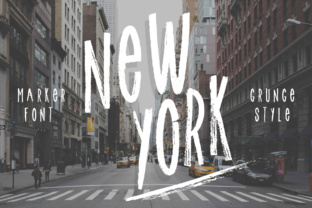
New York: The Handcrafted Grunge Brush Font That Stands Apart
If you spend any time browsing font libraries, you have probably noticed the flood of brush fonts. Many look alike. Many feel rushed. Then there is New York. This is not another digital imitation. It is a fully handcrafted, hand-drawn brush font with a raw grunge texture. Every character carries the marks of actual brush bristles, real ink pooling, and the unpredictable texture that only comes from making something by hand, not by algorithm. That distinction matters more than most people realize.
New York is built for visual impact. It works on posters, apparel, social media graphics, merchandise, branding, and printed invites. The grunge style gives it weight and attitude. But using a font like this well takes more than just installing it and typing a word. There are common mistakes, overlooked details, and practical traps that can turn a great font into a messy result. Here is what you need to know before you use it, and how to avoid the pitfalls that even experienced designers sometimes miss.
Why New York Attracts Attention
Handmade brush fonts are popular because they bring personality. They feel less corporate, less sterile. New York takes that further with a deliberate grunge approach. The strokes are not clean. They are rough, textured, and full of character. This makes the font ideal for projects where you want to communicate energy, authenticity, or a slightly worn, urban edge. Think of a handmade sign, a gritty brand identity, or a bold T-shirt design. That is the sweet spot for this typeface.
But here is the thing most people overlook: a font like New York is not a neutral tool. It is a strong visual voice. If you use it carelessly, it can overpower your message or clash with your layout. That is why understanding how to handle it matters far more than just picking it for its look.
Mistake One: Treating New York Like a Standard Text Font
The most common mistake I see is people using New York for body text, long headlines with too many words, or small sizes. This font is not designed for dense reading. The grunge texture and irregular stroke widths make it hard to read below a certain size. At 12 or 14 points, the details blur together. The texture becomes noise instead of character.
What happens: Your audience struggles to read the words. The visual quality of the font is wasted because no one can appreciate the brush marks. You end up with a messy, unprofessional look.
Better approach: Reserve New York for short, bold statements. Use it at 24 points or larger. Think single words, short phrases, or a powerful headline. Pair it with a clean, simple sans-serif or serif font for any supporting text. The contrast will make the brush font stand out even more.
Mistake Two: Ignoring Spacing and Kerning
Handmade brush fonts like New York have uneven spacing by nature. That is part of the charm. But when you type a word without adjusting the kerning, letters can drift too far apart or crowd together in ways that look accidental rather than intentional.
What happens: The word loses readability and looks sloppy. Instead of looking handcrafted, it looks careless. This is especially noticeable on merchandise or posters where every detail counts.
Better approach: Always manually adjust kerning when using New York. Pay attention to pairs like AW, VA, LY, or any combination where one letter has a long tail or open space. Tighten loose pairs and loosen tight ones. Most design software lets you adjust letter spacing in small increments. Take the extra two minutes to do it. Your final design will look polished, not thrown together.
Mistake Three: Overlapping the Grunge Texture with Busy Backgrounds
New York already has texture built in. The stroke edges are rough, and the ink spots add visual noise. When you place this font over a busy background, a pattern, or a photo with lots of detail, the font competes with the background instead of standing above it.
What happens: The text becomes hard to read. The grunge effect cancels out instead of adding impact. The overall design feels cluttered and confusing.
Better approach: Use solid, neutral backgrounds with New York. Black, white, kraft paper tones, concrete gray, or muted earth tones work well. If you do use an image, place the text over a clean area with low contrast, or add a subtle shadow or solid block behind the text. The goal is to let the brush strokes and texture be the star, not to fight for attention with the background.
Mistake Four: Using Only One Format Without Checking Your Needs
Fonts come in different formats. New York is often available in OTF, TTF, WOFF, and sometimes variable formats. Each has a purpose. Beginners often download the first file they see, install it, and then wonder why it looks different in a web browser versus a print file.
What happens: You might end up with missing characters, poor rendering on screen, or licensing limitations for commercial use. This can cost you time and money if you have to redo work.
Better approach: Before you buy or download, check which formats are included. If you are designing for print, OTF is usually best. For web, WOFF or WOFF2 is necessary. Also verify the license covers your intended use. Commercial projects like branding, merchandise, and apparel often require an extended license. Reading the fine print now saves headaches later.
Mistake Five: Forgetting That Handmade Fonts Have Limited Character Sets
Many handcrafted brush fonts focus on uppercase letters, numerals, and basic punctuation. New York is no exception. Some versions may lack extensive language support, ligatures, or alternate characters.
What happens: If you need accented characters, special symbols, or a full lowercase set, you might discover gaps midway through a project. That forces you to switch fonts or compromise on design.
Better approach: Check the character map before you invest time in a project. Look at the product page or preview to see what is included. If your project requires multilingual text or specific symbols, confirm the font covers those needs. If not, plan to use New York only for parts of your design that stay within its supported characters.
What to Check Before You Decide
Before you commit to using New York in a project, ask yourself a few questions:
- What size will this text appear? If it is under 20 points, consider a different font for that specific use.
- What background will it sit on? If the background is busy, you need a plan to make the text readable.
- What is the mood of the project? New York brings an urban, gritty, handmade feel. It will not suit a polished, corporate, or minimalist brand unless you use it sparingly as a contrast element.
- Do I have the right format and license? Do not assume. Check.
- How many words will I set in this font? Short phrases work best. Long headlines or paragraphs will disappoint.
Answering these honestly will prevent most of the common mistakes people make with strong display fonts like this one.
Practical Advice for Getting the Best Results
Once you have avoided the pitfalls, here is how to make New York shine:
- Pair it with a clean counterpart. A simple sans-serif like Helvetica, Montserrat, or even a classic serif works well. Let the brush font be the accent, not the entire composition.
- Use color sparingly. New York looks powerful in black, white, or a single bold color. Overusing color gradients or multiple colors can muddy the grunge effect.
- Experiment with texture overlays. Since the font already has texture, adding a subtle paper or concrete overlay to the background can create cohesion. Just keep it subtle.
- Test at actual size. Preview the font at the exact size and medium you plan to use. A font that looks great on screen at 100% may not work on a printed T-shirt at actual size. Print a test sample.
- Respect the handmade quality. Do not try to smooth or clean up the edges. The rough spots are what make it unique. Attempting to polish it into something neat defeats its purpose.
Why New York Deserves a Place in Your Toolkit
New York is not a font for every job. It is a specialty tool. But when the project calls for authenticity, character, and a bold handcrafted feel, it delivers in ways that mass-produced fonts cannot. The grunge style is not a gimmick, it is the result of real brush strokes on real paper, preserved in digital form. That is rare and worth respecting.
The designers who get the best results from New York are the ones who understand its limits as well as its strengths. They do not force it into roles it cannot fill. They let it be what it is: a loud, textured, opinionated brush font that commands attention. Used well, it elevates branding, merchandise, posters, and social media from ordinary to memorable.
If you are considering New York for a project, take the time to test it, adjust spacing, choose backgrounds wisely, and pair it with restraint. That effort will pay off in a final design that looks intentional, professional, and genuinely handcrafted. That is the whole point of choosing a font like this in the first place.