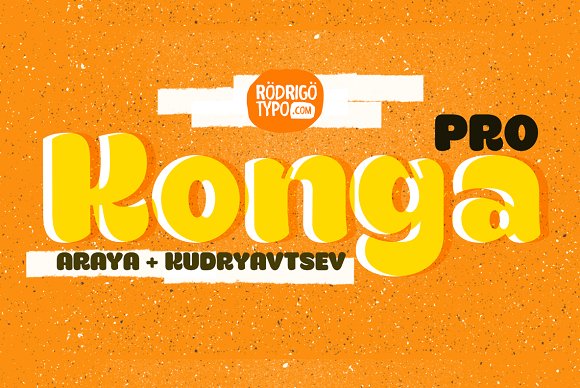
Konga Pro: A Font That Speaks to Modern Design Needs
You might know the original Konga – that bold, confident display font that made a quiet splash back in 2012. Now it’s back with a reboot that goes much deeper than a simple refresh. Konga Pro brings new life to the family, adding Cyrillic support and a rich set of alternates that make it far more adaptable than its predecessor. But what does that actually mean for someone who needs to pick a font for a real project? Let’s explore how this updated typeface fits into the messy, practical world of everyday design work.
Why the Update Matters Beyond the Hype
When a typeface adds new scripts and alternates, it’s easy to gloss over those changes as “nice to have.” But for anyone who has ever tried to localize a campaign or tweak a logo for a different audience, you know the difference is huge. Konga Pro’s Cyrillic coverage isn’t just a technical bullet point – it’s a bridge. Brands targeting Russian, Ukrainian, Bulgarian, Serbian, or Belarusian markets can now use the same distinct voice across languages without having to switch fonts and lose visual consistency. That alone saves hours of hunting for matching glyphs or awkwardly adjusting letter spacing in a second typeface.
The alternates are another quiet game-changer. Instead of being locked into one set of letters, you get choices that let you tailor the feel of a word or headline. Need a more playful edge? Swap in an alternate ‘g’ or ‘y.’ Want it to feel a bit more refined for a luxury product? Another set of alternates can tone down the quirkiness. It’s like having several flavors of the same font right at your fingertips, which is gold when you’re iterating on a concept late at night and need flexibility without starting from scratch.
Where Konga Pro Shines in the Wild
Let’s step away from the technicals and into real projects. The strength of Konga Pro lies in its distinct personality – it’s not a wallflower. That makes it ideal for situations where you want to be noticed, but still need readability at display sizes.
Branding for Boutique Businesses and Startups
Imagine a small coffee roastery that wants to stand out on a shelf crowded with artisanal labels. The owner doesn’t just need a logo – they need a vibe. Konga Pro, with its slightly retro charm and modern edge, can anchor a brand identity that feels handcrafted yet professional. Use the alternates to tweak the logo mark, then carry the same font into packaging headers, website banners, and even in-store signage. The Cyrillic support becomes a bonus if they ever decide to import beans from Eastern Europe or open a second location in a multilingual city. For a startup on a budget, having one font that does so much heavy lifting is a practical win.
Editorial and Magazine Covers
Editors and art directors know that a cover needs to stop someone mid-scroll. Konga Pro’s bold weight pulls that off without screaming. Its compact, sturdy letterforms hold up well in large sizes, even when stacked or spaced tightly. For a culture or travel magazine that covers stories across Europe and Asia, having Cyrillic glyphs means you can feature articles about Eastern European cities using the same typographic voice as the English headlines. No more mixing three different fonts just to handle a few names or quotes. The alternates also let you create custom title treatments that feel like one-offs without hiring a lettering artist.
Digital Ads and Social Media Graphics
Clarity at small sizes on a phone screen is a make-or-break factor. Konga Pro’s design holds up well in digital environments – think Instagram story titles, YouTube thumbnail text, or banner ads that need to grab attention fast. Because the font is inherently display-oriented, it doesn’t get muddy or lose impact when reduced to mobile-friendly dimensions. And if you’re running ads for a global audience, the Cyrillic support lets you create localized ad variants with the same visual punch, saving you from re-designing each version with a different font family.
Packaging for Niche Products
Whether it’s a craft beer label, a natural skincare jar, or a limited-edition snack box, packaging design benefits from fonts that communicate personality at a glance. Konga Pro’s alternates are especially handy here. You can use a set with tighter spacing for the main product name and a more open, playful set for flavor descriptors. The font’s sturdy structure also works well when printed on textured materials, like kraft paper or matte film, where delicate serifs often get lost. And if your product ever expands into a region where Cyrillic is the script, you won’t need to redesign the label – you already have the right characters.
Different Users, Different Wins
The beauty of Konga Pro is that it doesn’t try to be everything to everyone, but it gives each user something practical to latch onto.
- Graphic designers get a reliable workhorse for headlines, posters, and logos that doesn’t require extensive kerning or tweaking. The alternates keep projects from feeling repetitive, and the Cyrillic support opens the door for more international clients without learning a new typeface library.
- Marketers and brand managers gain consistency across markets. One font to license, one style guide entry, one voice – whether the campaign runs in English or Russian. That simplifies approvals and reduces the risk of mismatched typography in regional assets.
- Web developers and UI designers appreciate that Konga Pro works well as a display font for hero sections, navigation headers, and call-to-action buttons. It’s not a body text font, but for those bold moments, it loads cleanly in web formats and remains legible across browsers.
- Small business owners who handle their own design (or hire a freelancer on a tight budget) benefit from a font that does double duty. One purchase can cover packaging, signage, and digital presence without needing to buy multiple typefaces for different purposes.
Real Observations from Using Konga Pro
No font is perfect, and it’s worth noting where Konga Pro excels and where you might want to look elsewhere. On the strength side, its personality is strong but not gimmicky – it can feel playful, serious, or somewhere in between depending on the alternates and spacing you choose. The Cyrillic characters are well-integrated; they don’t look like an afterthought or a forced addition. The overall design feels cohesive across both Latin and Cyrillic, which is surprisingly rare in display fonts.
As for limitations, this is not a font for long paragraphs. Even at smaller sizes, the compact forms can feel heavy and reduce readability for body copy. Reserve it for headlines, subheads, and short bursts of text where impact matters more than flow. Also, while the alternates are versatile, they aren’t numbered in the dozens. You get a solid set of choices, but if you need massive variations for a project that demands extreme versatility, you might need a second font companion. Some users may also find the available weights (typically regular and bold) to be limiting for complex hierarchies. Pairing it with a clean sans-serif like Open Sans or a neutral serif for body text solves that quickly.
Things to Consider Before Choosing Konga Pro
Before you commit, think about context. Are you designing something that will be seen in both digital and print? Konga Pro handles both well, but test it at the actual sizes you’ll use – especially for small print where the bold strokes might fill in. Check the license terms for your specific use case: if you’re embedding in a web app or using it for logo reproduction, make sure you have the right permissions. And always preview the alternates in the actual layout. What looks charming in a type specimen might feel out of place in your specific composition. Try pairing it with a simple script or a geometric sans to see if the contrast works for your project.
Also consider the audience’s familiarity. In multilingual environments, the Cyrillic shapes will be read by native speakers, so ensure the letters feel natural. A quick test: show a headline to a colleague who reads Cyrillic before you finalize. The alternates can shift the tone – some sets are more traditional, others more playful – so choose wisely for the market you’re targeting.
Konga Pro isn’t a one-size-fits-all font, but it’s a smart choice when you need a voice that carries across scripts and shines in spot applications. Whether you’re refreshing a brand, launching a product, or designing a magazine that spans borders, the updates make it a more capable tool than the original ever was. And that’s the kind of evolution that actually helps you work smarter, not harder.