Crosshatcher: A Display Font That Balances Chaos and Clarity
Selecting a typeface for a project involves more than aesthetic preference. It requires weighing readability, emotional tone, technical versatility, and how the font behaves across different sizes and contexts. Crosshatcher is a display font that operates on an unusual premise: up close, it appears as a messy scribble, but at smaller sizes or from a distance, it resolves into a coherent, legible form. This all-caps sans serif typeface mimics the look of marker scribble over a stencil, giving it a layered, rough-hewn quality that stands apart from cleaner display fonts. Understanding how Crosshatcher works, where it excels, and where it may fall short can help you decide whether it suits your design needs.
What Is Crosshatcher?
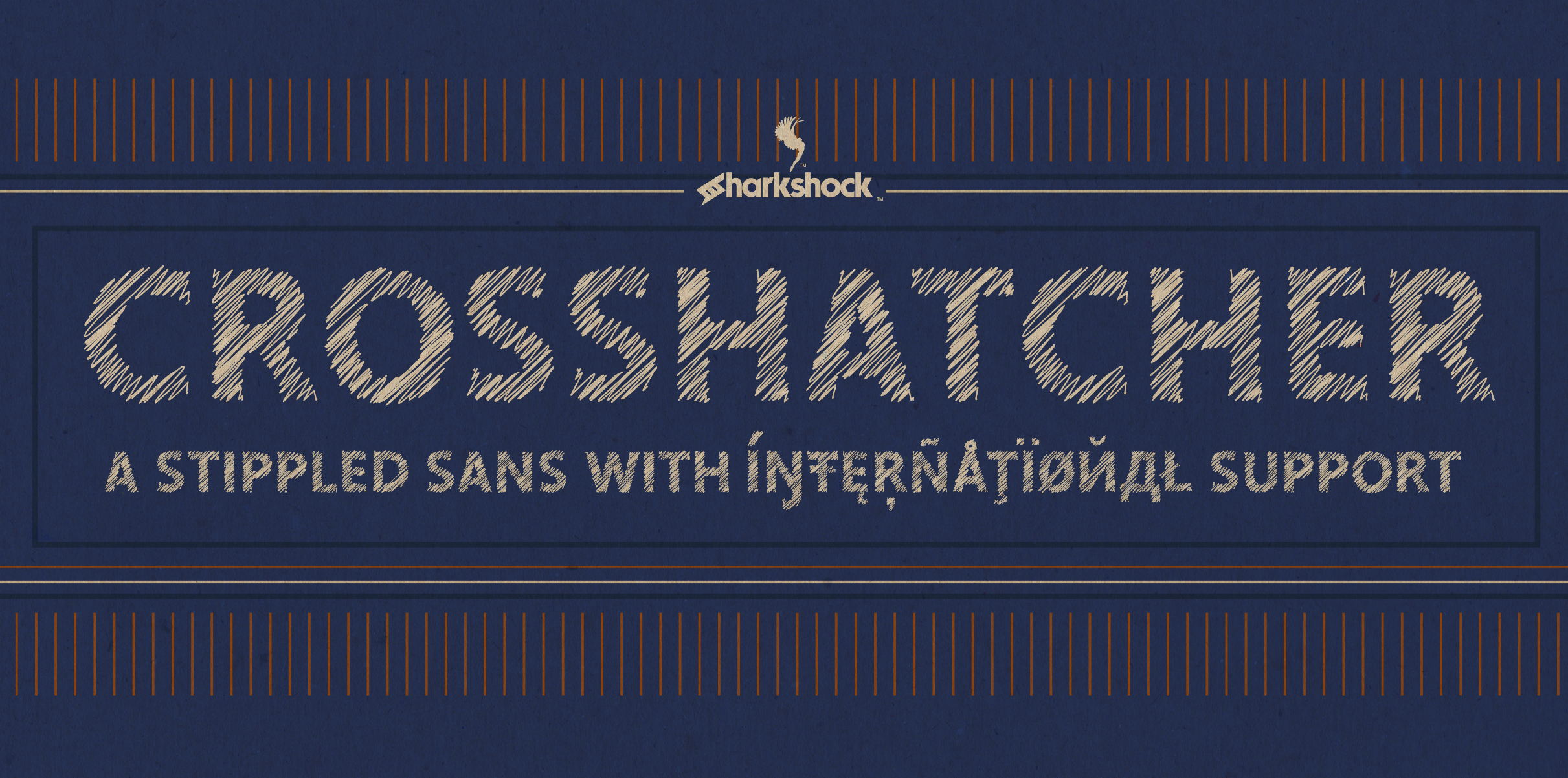
Crosshatcher is an all-caps sans serif display font designed to evoke the appearance of handwriting scrawled across a stencil template. The letterforms carry uneven edges, overlapping strokes, and a deliberately unrefined texture that suggests rapid, hand-drawn marks. Despite this chaotic close-up impression, the overall silhouette of each character remains structured enough that the font becomes readable at smaller point sizes or when viewed from a moderate distance. This duality — messy on inspection, clear in context — is the defining feature of Crosshatcher.
The font covers a broad character set that includes Basic Latin, extended Latin, diacritics, Cyrillic, punctuation, and kerning. This range makes it usable across multiple languages and in projects that require special characters or accented letters. The inclusion of kerning ensures that even with the rough aesthetic, spacing between characters remains intentional and consistent.
How Crosshatcher Works: The Scribble-Over-Stencil Effect
The visual effect of Crosshatcher comes from layering what looks like handwritten scribble over a stencil-shaped base. The outer boundaries of each letter are uneven, with strokes that appear to overlap or spill slightly beyond the intended form. This creates a texture similar to graffiti, marker art, or quick sketches on rough surfaces. At typical display sizes — 36 points or larger — the roughness is clearly visible, and the font projects a raw, energetic personality.
When scaled down to body text sizes, the individual irregularities become less noticeable, and the overall letter shapes become the dominant visual cue. At these smaller sizes, Crosshatcher reads as a sturdy, all-caps sans serif with a slightly distressed finish. This dual behavior makes it a versatile choice for projects where the same typeface might appear in both large headlines and smaller supporting text.
Who Might Benefit from Using Crosshatcher
Crosshatcher is not a general-purpose text font. Its design targets specific use cases where a hand-drawn, unpolished, or edgy look is appropriate. Designers and marketers working in the following areas may find it particularly useful.
Branding and Advertising
Brands that want to communicate authenticity, youthfulness, or a DIY aesthetic can use Crosshatcher to reinforce that identity. It works well for posters, flyers, outdoor signage, and digital ads where the goal is to grab attention quickly. The messy texture gives the impression of immediacy — as if the message was written in the moment, not carefully typeset.
Apparel and Merchandise
Clothing graphics, especially those aimed at streetwear, skate culture, or music merchandise, often rely on typefaces that feel hand-drawn or graffiti-like. Crosshatcher fits this space naturally. Its all-caps structure keeps letters bold and readable on fabrics, while the scribbled texture adds visual interest at normal viewing distances.
Publishing and Editorial Design
Magazines, zines, book covers, and other print publications that aim for a raw or underground feel can use Crosshatcher for headlines, pull quotes, or section headers. It creates contrast when paired with clean body typefaces, and its extended character support allows for multilingual publications without switching fonts.
Strengths of Crosshatcher
One of the main strengths of Crosshatcher is its distinctive personality. In a landscape of polished, flawless typefaces, a font that looks intentionally rough stands out. This can be a strategic advantage in crowded visual environments where differentiation matters.
Another strength is the balance between texture and legibility. Many highly textured fonts lose readability at any size, but Crosshatcher's stencil-like structure preserves enough shape information that the words remain decipherable even when the roughness is most visible. The kerning support also helps maintain even spacing, which is not always guaranteed with hand-drawn style fonts.
The character coverage is also a practical benefit. Including Cyrillic and extended Latin means Crosshatcher can be used for international campaigns, packaging, or publications without needing a second typeface for non-English text.
Limitations and Tradeoffs to Consider
Crosshatcher is a display font, and using it outside display contexts may cause problems. At very small sizes — below 14 points — the scribble effect can overwhelm the letter shapes, making text difficult to read. Even with the structural clarity at smaller sizes, the font is not designed for long-form body copy. If your project requires extensive reading text, Crosshatcher is best reserved for headlines or short emphasis phrases.
The all-caps format is another limitation. Because the font only includes uppercase letters, it cannot convey the mixed-case rhythm that many readers find easier to process. For labels, short messages, or brand names, this is rarely an issue. For any content that requires sentence case or proper nouns with capitalization distinction, Crosshatcher may feel restrictive.
The aesthetic is also polarizing. What one designer sees as raw authenticity, another may see as unprofessional or unfinished. Crosshatcher is best suited to projects where the audience expects or appreciates a hand-drawn, edgy look. For conservative industries like finance, healthcare, or legal services, this typeface would likely feel out of place.
When Crosshatcher Is a Strong Fit
- Streetwear and fashion branding: The scribble-over-stencil look aligns with urban and youth-oriented identities.
- Event posters and flyers: Music festivals, art shows, and underground events benefit from the font's energetic, immediate feel.
- Product packaging for niche or artisanal goods: Small-batch or handmade products can use Crosshatcher to reinforce a craft or DIY narrative.
- Social media graphics: Short, bold text overlays on images or videos benefit from the font's contrast and readability at moderate sizes.
- Multilingual projects: The extended character set reduces the need for additional fonts when working with Cyrillic or accented Latin languages.
When Alternatives May Be Worth Considering
- Long-form reading content: For articles, books, or reports, a standard text face with lower contrast and higher readability is a better choice.
- Corporate or professional branding: Organizations that need to convey stability, trust, or formality will likely find Crosshatcher too casual.
- Mixed-case requirements: If your content needs lowercase letters or title case, an all-caps font will not serve the purpose effectively.
- Very small text sizes: At sizes below 14 points, the scribble effect reduces legibility. A cleaner sans serif would perform better.
- High-legibility environments: For signs or interfaces that must be read quickly and accurately by a wide audience, a more standard display typeface is safer.
Practical Tips for Evaluating Crosshatcher for Your Project
If you are considering Crosshatcher, start by testing it at the sizes and distances it will actually be seen. Enlarge a sample headline to the full size it would appear on a poster or clothing graphic, and view it from several feet away. Then reduce it to the smallest size it might appear in your layout, and assess legibility from a typical reading distance. This simple test reveals whether the font performs as expected in your specific context.
Pair Crosshatcher with a clean, neutral typeface for body text. A simple sans serif or a straightforward serif will provide contrast and allow Crosshatcher to serve as the focal point without overwhelming the layout. Because Crosshatcher carries strong visual weight, it works best in short bursts rather than extended passages.
Consider your audience's expectations. If your project targets a younger, trend-aware demographic, Crosshatcher's rough aesthetic may resonate strongly. For older or more traditional audiences, the same font may appear sloppy. Context matters as much as the design itself.
Also check the font's behavior in digital environments. Some highly textured fonts lose clarity on low-resolution screens or when compressed for web use. Test Crosshatcher on the platforms where it will actually appear — whether that is a website, a mobile ad, or a print-on-demand product — before making a final decision.
Final Considerations
Crosshatcher is a display font with a specific design voice. Its scribble-over-stencil effect creates a distinctive look that works well for branding, apparel, advertising, and editorial projects where a raw, hand-drawn feel is an asset. The extended character coverage, kerning support, and dual readability at different sizes add practical value, but the all-caps format and limited legibility at very small sizes are genuine constraints.
For designers and marketers who need a typeface that communicates immediacy, energy, and a slightly untamed character, Crosshatcher offers a tool that is both functional and expressive. For projects that require polish, formality, or long-form readability, alternatives will serve better. Evaluating Crosshatcher against the specific needs of your project — size, context, audience, and tone — will tell you whether this chaotic-but-coherent font is the right fit.