Outliners: A Hand-Drawn Font That Brings Playfulness Back to Design
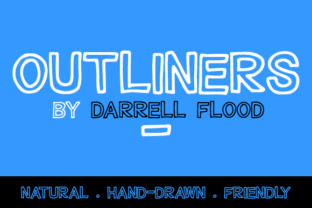
In a digital landscape saturated with sleek, uniform typefaces, the craving for something more human has never been stronger. Enter Outliners, a hand-drawn font created by Darrell Flood that captures the raw, unpolished energy of writing with a large marker. Unlike the perfectly weighted vectors of traditional display fonts, Outliners embraces the irregular, blocky strokes that come from a real hand moving across paper. It is not trying to be invisible. It is trying to be noticed, remembered, and enjoyed.
For designers, entrepreneurs, and content creators who spend their days staring at screens, this kind of typography offers a subtle but powerful shift. It signals warmth, spontaneity, and a willingness to break from the expected. And in a world where audiences are increasingly skeptical of overly polished branding, that small gesture can make all the difference.
Why Hand-Drawn Typography Matters Right Now
The past decade has seen typography move in two seemingly opposite directions. On one side, minimalist sans-serifs like Helvetica and Inter have become the default for clean, professional communication. On the other, hand-drawn and custom lettering has surged in popularity across social media, packaging, and editorial design. Both have their place, but the rise of hand-drawn fonts reflects a deeper shift in what people expect from visual communication.
Consumers today are more visually literate than ever. They can spot a stock photo, a cookie-cutter template, or a generic font from a mile away. They are not just looking for information. They are looking for personality. They want to feel like a real person created the thing they are looking at. Outliners delivers exactly that sense of authenticity. Its uneven strokes and playful shapes remind us that design does not have to be perfect to be effective. In fact, the imperfections often make it more memorable.
This trend is not limited to niche indie brands. Major companies from tech startups to established retailers are incorporating hand-drawn elements into their identity systems, social media content, and even user interfaces. The reason is straightforward: hand-drawn typography communicates a human presence in an increasingly automated world. When a brand uses a font like Outliners, it signals that there is a person behind the screen, someone who took the time to write rather than just type.
How Typography Has Evolved and What That Means for Creators
Typography has come a long way from the days of choosing between Times New Roman and Arial. The explosion of digital tools, font marketplaces, and independent type designers has given creators access to thousands of unique typefaces. But with that abundance comes a new challenge: how do you choose a font that actually says something about your brand or project?
Ten years ago, hand-drawn fonts were often seen as niche or even unprofessional. They were reserved for children's books, DIY blogs, and casual invitations. That perception has changed dramatically. As audiences have grown tired of corporate uniformity, hand-drawn typography has crossed into mainstream acceptance. It now appears everywhere from restaurant menus to tech conference keynotes. The key is not to use it carelessly, but to understand when and why it works.
Outliners fits naturally into this evolution. It is not a delicate script or a refined serif. It is bold, chunky, and unapologetically handmade. That makes it particularly effective for headlines, posters, social media graphics, product labels, and any context where you want to grab attention quickly. The irregular outlines and variable stroke widths create a sense of motion and energy that rigid digital fonts simply cannot replicate.
For the modern creator, this represents an opportunity. Audiences are not just tolerating hand-drawn typography. They are actively responding to it. A well-chosen font like Outliners can differentiate your content in a crowded feed, make your packaging stand out on a shelf, or add a layer of warmth to an otherwise sterile website. The evolution of taste has worked in your favor.
Practical Implications for Professionals and Businesses
Integrating a hand-drawn font into your design toolkit is not just an aesthetic choice. It has real consequences for how your audience perceives and engages with your work. Here are a few practical considerations for anyone thinking about using Outliners in their projects.
Brand Personality and Differentiation
If your brand relies heavily on stock imagery, generic templates, or standard typefaces, you risk blending into the background. Hand-drawn typography offers a relatively low-effort way to inject personality without overhauling your entire identity. A single headline set in Outliners can communicate that your brand is approachable, creative, and not afraid to have fun. For small businesses, freelancers, and personal brands, this can be a deciding factor in whether a potential customer remembers you after a five-second scroll.
Social Media and Content Marketing
Social media algorithms reward engagement, and engagement often comes from content that stops the scroll. Hand-drawn typography naturally draws the eye because it looks different from the polished, automated visuals that dominate most feeds. Using Outliners for quote cards, announcements, or call-to-action overlays can increase the likelihood of someone pausing to read. The font's bold, marker-like strokes are especially effective on mobile screens, where detail can get lost but big shapes remain readable.
Print and Physical Products
For anyone producing physical goods, from stickers and T-shirts to packaging and posters, Outliners brings a tactile quality that translates well to print. The hand-drawn aesthetic feels at home on kraft paper, recycled materials, or any surface that benefits from an artisanal touch. Because the font is meant to replicate marker strokes, it pairs naturally with off-the-cuff layouts, hand-drawn illustrations, and raw photography. If your product or brand has a DIY, creative, or playful identity, this font can reinforce that message without additional effort.
Education and Instructional Content
Teachers, educators, and instructional designers often struggle to make learning materials feel inviting. Overly formal typography can make a worksheet or online lesson feel sterile and unapproachable. Using a font like Outliners for headings or key terms introduces a sense of fun and informality that can lower the barrier for learners. It signals that the content is not meant to be intimidating, but engaging. This is especially useful for younger audiences or any context where creativity and exploration are part of the learning process.
Realistic Recommendations for Getting Started
If you are considering adding Outliners to your font library, the best approach is to start small and experiment. Here are a few grounded suggestions based on how hand-drawn typography tends to perform in real-world projects.
- Use it for short text only. Outliners is a display font by nature. Its blocky, hand-drawn strokes are ideal for headlines, titles, and short phrases, but they become fatiguing to read in long paragraphs. Reserve it for the moments you want to emphasize, not for body copy.
- Pair it with a clean, neutral typeface. Because Outliners has a strong personality, it pairs best with simple, readable fonts like Roboto, Open Sans, or Lato. Let Outliners take the spotlight and let the supporting typeface provide structure and readability.
- Consider the context. Not every project calls for hand-drawn typography. It works exceptionally well for creative industries, children's products, event branding, personal blogs, and social media content. For highly formal or conservative industries, use it sparingly or test it with a small audience first.
- Embrace the imperfections. The whole point of Outliners is that it looks hand-drawn. Do not try to make it perfect. If you find yourself obsessing over spacing or alignment, you may be missing the point. Let the font breathe and let it feel human.
Why Outliners Stands Out Among Hand-Drawn Fonts
There is no shortage of hand-drawn fonts available today, but not all of them succeed in capturing the spontaneous feel of actual marker writing. Many are overly refined, losing the rough edges that make hand-drawn typography appealing in the first place. Outliners, designed by Darrell Flood, takes a different approach. It leans into the irregularities: the varying line weights, the slightly uneven outlines, the sense that someone sat down with a chunky marker and just started writing.
This makes it particularly effective for projects that need to feel immediate and energetic. Whether you are designing a poster for a local event, a set of social media templates, or a custom piece of merchandise, Outliners delivers that handcrafted look without requiring you to actually write anything by hand. It gives you the visual benefit of handmade typography with the convenience of a digital font.
For creators who value both efficiency and authenticity, that combination is hard to beat.
Small Changes, Real Impact
Typography is one of those design elements that people rarely notice when it is done well, but they always notice when it is missing. A thoughtful font choice can elevate a project from forgettable to distinctive. Outliners may not be the right fit for every project, but when the goal is to communicate warmth, creativity, and a human touch, it is a tool worth having in your arsenal.
The next time you sit down to design a headline, a flyer, or a social graphic, ask yourself what kind of energy you want to convey. If the answer is playful, approachable, or just a little bit rebellious, consider reaching for a font that looks like it was drawn by hand. With Outliners, you get the personality of a marker without the mess. And in a digital world that often feels overly sanitized, a little mess can be exactly what your audience needs.