Blackfat Script: A Bold Retro Script Font for Design Projects
Selecting the right typeface is often one of the most consequential decisions in any design project. The font carries tone, period, and personality, and it can either amplify or undermine the intended message. Blackfat Script has emerged as a new option in the bold retro script category, and it invites consideration from designers and brand owners alike. This article examines what Blackfat Script offers, where it fits, and how it compares to alternatives, so you can decide whether it aligns with your specific project goals.
Understanding Blackfat Script’s Characteristics
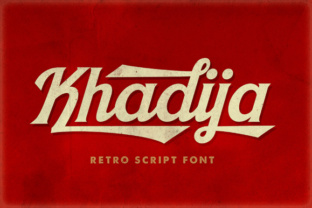
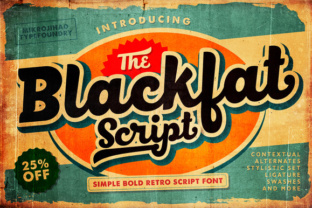
Blackfat Script is a display typeface that combines the energy of mid-century hand-lettering with the weight of a modern bold face. Its letterforms carry pronounced contrast between thick and thin strokes, which gives it a rhythmic, dynamic appearance. The script is connected in many letter pairs, yet retains enough individuality in each character to avoid becoming illegible at larger sizes.
The design leans heavily into a vintage aesthetic. You will notice rounded terminals, sweeping descenders, and a general sense of motion that recalls signage from the 1950s and 1960s, as well as the hand-painted lettering found on diner menus and product packaging from that era. At the same time, the bold weight ensures that the font holds up well in digital environments, where thin scripts often lose detail on screens.
Blackfat Script includes uppercase and lowercase characters, numerals, punctuation, and a selection of ligatures. The ligatures are particularly relevant here because they help smooth out transitions between certain letter pairs, which is a common challenge in script fonts. Without these contextual alternates, a script can appear disjointed. With them, the text flows more naturally.
Why Designers and Brand Owners Consider Blackfat Script
The primary appeal of Blackfat Script lies in its ability to convey nostalgia without feeling outdated. Many retro-inspired fonts either lean too far into novelty, making them unusable for serious projects, or they strip away too much character in an effort to appear modern. Blackfat Script attempts to strike a balance between these extremes.
One practical reason to consider this font is its readability at display sizes. Because the strokes are thick and the counterspaces are relatively open, the letterforms remain distinct even when scaled down to medium sizes, such as those used in subheadings or on product labels. This is not always the case with script fonts, which can become muddled when reduced.
Another factor is versatility across media. Blackfat Script works in both print and digital contexts. On a poster or a book cover, the bold strokes catch light and create visual impact. On a screen, the weight helps the text stand out against busy backgrounds, which is useful for hero sections on websites or for social media graphics where attention is scarce.
The font also reduces the amount of manual kerning and tracking adjustment needed. Script fonts often require extensive tweaking to prevent awkward gaps between letters. Blackfat Script’s built-in spacing and ligature system handle much of this work automatically, which can save time during layout and production.
Specific Use Cases Where Blackfat Script Performs Well
- Headings and titles: The bold retro style gives headlines a distinctive character without requiring decorative effects. It works as a standalone element or paired with a neutral sans-serif for contrast.
- Logos and branding: For brands that want to evoke craftsmanship, tradition, or a sense of heritage, Blackfat Script provides a hand-lettered feel that is difficult to achieve with geometric fonts.
- T-shirts and merchandise: The weight and clarity of the font make it legible on fabric, where thinner scripts often break up or become hard to read from a distance.
- Labels and packaging: Product packaging in categories such as craft beverages, artisanal food, and grooming products frequently relies on vintage-inspired typography. Blackfat Script fits this aesthetic naturally.
- Book covers and posters: In situations where the title needs to dominate the composition, the bold weight ensures visibility even when scaled to large dimensions.
Tradeoffs and Considerations
No font is universally applicable, and Blackfat Script comes with its own set of limitations that are worth evaluating before committing to a project.
The most significant tradeoff is the font’s specificity. Because Blackfat Script carries such a strong retro identity, it can overwhelm or conflict with certain design directions. If your project requires a neutral or minimalist aesthetic, this typeface may feel out of place. It works best when the overall design language already leans vintage or when you intentionally want to create contrast with a very modern layout.
Another consideration is legibility at very small sizes. While Blackfat Script is readable at medium and large display sizes, it is not optimized for body text. The script’s connected strokes and variable stroke widths can make it difficult to read in paragraphs or at sizes below approximately 18 points. Designers should plan to use this font exclusively for headlines, short phrases, or accent text.
Language support is another factor. Blackfat Script covers a standard Latin character set, which includes Western European languages. If your project requires extended Latin support, such as for Central or Eastern European languages, or non-Latin scripts, you may need to verify coverage or consider a supplementary font.
Licensing terms also vary. Some script fonts are sold with restrictive licenses that limit the number of users or the type of projects allowed. Before purchasing or downloading Blackfat Script, confirm that the license covers your intended use, whether that is commercial branding, web embedding, or merchandise production.
When Alternatives May Be Worth Considering
Blackfat Script is not the only bold retro script on the market, and in some situations, another option may serve you better.
If your project requires a script that is more restrained and less period-specific, fonts like Bodoni Script or Zapfino offer elegance without the strong mid-century reference. These alternatives are better suited for formal invitations, luxury branding, or editorial work where the goal is sophistication rather than nostalgia.
If you need a script that is optimized for web use and long-form text, consider a more neutral script such as Pacifico or Dancing Script. These fonts are designed with greater attention to on-screen legibility at smaller sizes and tend to have a lighter, more casual feel that works for extended reading.
For projects that demand a purely hand-drawn or irregular look, a decorative script like Market Deco or Funky Fresh provides more variation and personality. However, these come at the cost of readability and consistency, which may or may not be acceptable depending on your audience and use case.
Finally, if budget is a primary concern, there are free and open-source alternatives such as Great Vibes or Alex Brush that offer a similar bold script aesthetic. These fonts may not have the same level of polish or ligature support, but they are suitable for low-budget projects or early-stage prototyping.
Practical Decision-Making Insights
To determine whether Blackfat Script aligns with your goals, start by clarifying the role typography will play in your project. Ask yourself the following questions:
- What period or feeling should the text convey? If you want a clear mid-century retro look, Blackfat Script is a strong candidate. If you need something more timeless or contemporary, look elsewhere.
- At what sizes will the font appear? If the text will be used primarily at display sizes above 24 points, Blackfat Script’s strengths are well suited. If small sizes below 18 points are required, test the font carefully before committing.
- What is the surrounding design context? Vintage-inspired scripts pair well with muted color palettes, textured backgrounds, and simple geometric shapes. If your design uses bright gradients, intricate patterns, or heavy imagery, the font may compete for attention.
- How much time can you spend on typographic adjustments? While Blackfat Script reduces manual kerning, it still benefits from careful spacing and layout work. Allocate time to fine-tune letter spacing and line height for your specific use case.
- Does the license match your distribution needs? For branding and merchandise, confirm that the license permits commercial use and reproduction on products. For web use, check whether webfont embedding is allowed and whether any additional fees apply.
Testing is the most reliable way to evaluate a font. Download the trial version if available, or use the font in a mockup of your actual layout. Assess legibility at the sizes you plan to use, and compare it side by side with other script fonts you are considering. Pay attention to how the font handles common letter combinations, especially in your specific language or industry terminology.
Balancing Aesthetic Appeal with Practical Constraints
Blackfat Script offers a distinctive visual voice that can strengthen a project’s identity when used deliberately. The bold weight, retro character, and built-in ligature system reduce some of the friction that comes with using script fonts, making it a practical choice for designers who want impact without excessive manual adjustment.
At the same time, its specificity means it is not a universal solution. Projects that require neutrality, small-size readability, or broad language support will need to look beyond this font. The key is to match the font’s strengths to the project’s requirements rather than forcing the font into a context where it does not belong.
Final Considerations for Your Decision
Blackfat Script occupies a specific niche in the typography landscape. It is not a workhorse font for body text, nor is it a neutral utility face. It is a character-driven display typeface that works best when the design calls for a bold, retro, hand-lettered feel. For projects centered on headings, logos, posters, labels, book covers, and merchandise with a vintage slant, it is a strong contender.
If your project aligns with these use cases and the tradeoffs around size constraints, period specificity, and language coverage are acceptable, Blackfat Script is worth incorporating into your typographic toolkit. If your needs fall outside these parameters, you will likely find a better match among the alternatives discussed here.
In the end, the most effective font choice is one that serves the message without calling excessive attention to itself. Blackfat Script can do exactly that when placed in the right context. Evaluate it against your actual project conditions, test it in your layout, and make the decision based on what serves your audience and your communication goals best.