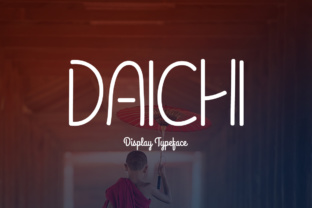
Daichi: A Stencil Font That Brings Warmth, Character, and Authenticity to Modern Design
Typography has always been a silent partner in communication. It shapes how we feel about a message before we even read a single word. Among the many typefaces available today, Daichi stands out for a simple reason: it feels handmade. This stencil font carries organic hand strokes that resist the sterile perfection so common in digital design. It is not trying to be flawless. Instead, Daichi invites a sense of sincerity and play into projects that often need exactly that. For anyone working in creative fields, marketing, content creation, or even small business branding, understanding what Daichi offers and why it matters can open up new ways to connect with an audience.
What Daichi Brings to the Table
Daichi is a stencil font, but that description alone undersells it. Most stencil typefaces lean toward industrial, military, or rigid aesthetics. Daichi takes a different path. Its letterforms feel drawn by hand rather than cut by machine. The strokes are uneven in a deliberate way. They breathe. They have texture. This gives Daichi a personality that is both fun and grounded, making it suitable for projects that need a human touch without becoming childish or chaotic.
The charm of Daichi lies in its balance. It is playful but not silly. It is rough but not unreadable. It works well for headlines, posters, packaging, social media graphics, and even short-form body text when used thoughtfully. Because it carries a hand-drawn quality, it pairs naturally with minimalist layouts, neutral color palettes, and other typefaces that lean clean and modern. The result is a visual contrast that feels curated rather than accidental.
Why Typography Trends Are Shifting Toward Authenticity
Over the past decade, design culture has moved away from overly polished aesthetics. Flat design and minimalism dominated for years, but audiences began craving warmth. The shift toward authenticity in branding and content is not a passing fad. It reflects a deeper change in how people consume media. Users are bombarded with thousands of messages daily. Clean, corporate typography blends in. Something with character, like Daichi, stops the scroll.
This trend is visible across industries. Small coffee shops use handwritten-style menus. Creative agencies adopt rough, textured logos. Even large brands experiment with bespoke typefaces that feel less like corporate statements and more like human conversations. Daichi fits naturally into this movement because it does not pretend to be something it is not. It is honest about its handmade origins. That honesty resonates with audiences tired of overproduced content.
The rise of remote work, independent creators, and small businesses has also fueled this shift. Entrepreneurs and freelancers need ways to stand out without massive budgets. Typography offers a cost-effective entry point. Choosing a distinctive font like Daichi signals personality and intention. It tells the audience that someone cared enough to make a choice, and that choice was not the default.
How Daichi Fits Into Modern Workflows
For designers and content creators, Daichi is versatile in practice. It works across print and digital mediums without losing its character. On a poster, the hand-drawn strokes add a tactile quality that invites closer inspection. On a website or app, it can serve as a heading font that breaks up sterile layouts. When used for social media graphics, Daichi gives quotes and announcements a friendly, approachable tone.
One practical recommendation is to use Daichi for short, impactful text. Because its stencil construction introduces small gaps in the letterforms, it is best suited for words or phrases rather than long paragraphs. This is not a limitation. It is a constraint that encourages intentionality. A tagline, a product name, or a key message set in Daichi will carry more weight than the same text set in a standard sans-serif font.
Daichi also pairs well with softer backgrounds. A muted watercolor wash, a textured paper effect, or even a simple gradient allows the font's organic strokes to stand out. The goal is to let Daichi breathe. Overloading the design with competing textures or colors dilutes the effect. Keep surrounding elements simple, and Daichi will do the heavy lifting.
For Small Business Owners and Entrepreneurs
Branding is one of the most important investments a small business can make. Yet many entrepreneurs feel pressured to look larger than they are. Daichi offers an alternative. It suggests a brand that is confident enough to be itself. A bakery, a tattoo studio, a yoga practice, or a handmade goods shop can all benefit from the warmth Daichi brings. It communicates approachability and craft without needing expensive custom lettering.
Consider a small candle company. Their labels need to convey warmth, natural ingredients, and a personal touch. A standard serif or sans-serif font might feel too cold or too generic. Daichi, on the other hand, echoes the handmade nature of the product itself. Customers see the label and immediately sense that care went into both the product and its presentation.
For Marketers and Content Creators
Content saturation is real. Marketers constantly look for ways to differentiate. Typography is an underused lever. Using Daichi in headlines, social media carousels, or email headers can increase recognition and recall. It signals that the content is not another template. It was crafted with intention.
For bloggers and educators, Daichi can help establish a visual identity across platforms. A consistent font choice builds familiarity. Readers begin to associate the look with the voice. Over time, that association builds trust. Daichi, with its friendly but sincere appearance, supports a tone that is informative without being stiff, and personal without being unprofessional.
For Freelancers and Creatives
Freelancers often need to communicate their style quickly. Portfolios, pitch decks, and social profiles all benefit from cohesive typography. Daichi can serve as a signature element. Used sparingly, it becomes a visual shorthand for creativity and approachability. It tells potential clients that this is someone who values design and understands how to use it to communicate.
For example, a freelance illustrator might use Daichi in their logo and portfolio headings. The font's hand-drawn quality aligns naturally with illustration work. It creates a unified aesthetic that feels intentional rather than random. Clients looking for a creative partner will notice that alignment.
The Evolution of Stencil Fonts in Digital Design
Stencil fonts have been around for decades, but their role has evolved. Originally designed for practical purposes like marking crates and military equipment, stencil typefaces carried rugged, utilitarian associations. Designers began experimenting with them in the late twentieth century, pushing them into editorial and advertising contexts. What was once purely functional became expressive.
Daichi represents this evolution in a contemporary form. It retains the structural logic of a stencil the breaks in the letterforms that allow for physical or digital stenciling but it abandons the rigidity. The organic strokes introduce warmth and spontaneity. This blend of structure and freedom is exactly what many modern projects need. It acknowledges constraints while embracing creativity.
Audiences today are sophisticated. They recognize when a design feels generic. Stencil fonts like Daichi help designers avoid that trap. They offer a middle ground between the coldness of geometric typefaces and the unpredictability of full hand lettering. That middle ground is where much of contemporary design operates.
What to Keep in Mind When Using Daichi
Like any distinctive tool, Daichi works best when used with purpose. Overusing it in a single project can reduce its impact. Limit it to headings, key words, or short phrases. Let other elements in the layout support it rather than compete with it. Consider the context. Daichi shines in informal, creative, or warm settings. It may not suit legal documents, financial reports, or ultra-corporate presentations. That is not a weakness. It is a sign that the font knows what it is and what it is not.
Color also matters. Daichi interacts differently with light and dark backgrounds. On light backgrounds, the stencil gaps create an airy, open feel. On dark backgrounds, the font becomes bolder and more dramatic. Test both versions to see which aligns with the message.
Pairing is another consideration. Daichi works well with clean sans-serif fonts like Open Sans, Lato, or Montserrat for body text. The contrast between a hand-drawn stencil and a clean sans creates visual hierarchy and guides the reader naturally. Avoid pairing it with another highly decorative font. That often leads to visual chaos.
Why Daichi Matters Now
The design landscape is crowded. Every brand, creator, and business competes for attention. Standing out requires more than a good product or a smart message. It requires a visual identity that feels real. Daichi helps achieve that by injecting personality without sacrificing readability or professionalism.
As audiences grow more discerning, the demand for authenticity will only increase. Generic stock photos and default fonts are losing their effectiveness. People want to connect with brands and creators that feel human. Daichi, with its organic hand strokes and sincere character, is a tool that supports that connection.
For professionals across fields, from marketers to educators to entrepreneurs, the choice of typeface is no longer a minor detail. It is a strategic decision. Daichi offers a way to signal warmth, creativity, and confidence all at once. That is a lot to ask from a single font, but Daichi delivers.
Whether you are redesigning a brand, launching a product, or building a content platform, consider what Daichi can bring. It is not just a font. It is a statement about how you want to be seen. And in a world that often feels impersonal, that statement matters more than ever.