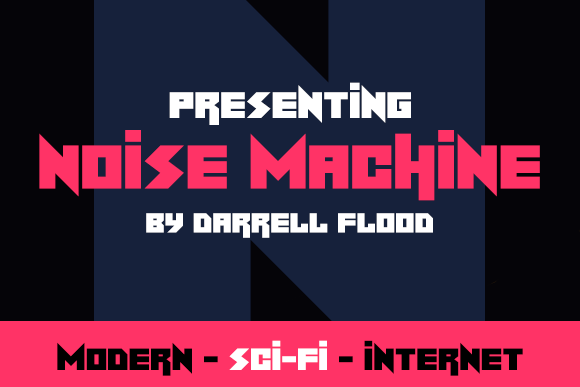
Noise Machine: A Practical Look at This Angular, Sci-Fi Font and Where It Fits
Choosing the right typeface for a project often comes down to matching personality with purpose. A font that works well for a corporate brochure rarely suits a gaming interface or a poster for a sci-fi short film. Noise Machine, a modern, angular typeface created by Darrell Flood, enters this conversation with a distinct electric, sci-fi style. It is a font that makes no attempt to blend in. For designers, developers, and creative professionals weighing their options, understanding exactly what Noise Machine offers, where it excels, and where it may fall short is essential for making an informed choice.
What Makes Noise Machine Distinct
Noise Machine is built around sharp angles, geometric precision, and a deliberate sense of tension. Unlike many geometric fonts that prioritize smooth curves or neutral readability, Noise Machine embraces a fragmented, almost mechanical aesthetic. The letterforms feel engineered rather than drawn. This gives the typeface a strong visual rhythm that immediately communicates themes of technology, speed, and futuristic environments.
The font is marketed as suitable for a large range of design ideas, but its strongest identity is rooted in space and robotic themes. The angular strokes evoke circuit board traces, spacecraft hulls, or digital readouts. Darrell Flood has crafted a typeface that does not rely on ornamentation. Instead, the character shapes themselves carry the visual weight. Each letter feels like a component in a larger machine, which is appropriate given the name.
This is not a font that attempts to be invisible. Noise Machine demands attention and expects to be used deliberately. For projects that require a neutral, transparent voice, it is likely the wrong choice. But for projects that need a bold, technological presence, it brings something few other fonts can offer without heavy customization.
How Noise Machine Compares with Similar Options
When evaluating Noise Machine, it helps to place it alongside other typefaces that serve similar visual purposes. There are several categories of fonts that overlap with its territory: angular sans-serifs, techno-styled faces, and display fonts with an industrial edge.
Compared to standard geometric sans-serifs like Futura or Gotham, Noise Machine is far less versatile for body text. Those fonts were designed for readability across sizes and contexts. Noise Machine, by contrast, is primarily a display font. It works best at larger sizes where its angular details can be appreciated. At small sizes, the sharp cuts and narrow apertures may reduce legibility, especially on screens.
Within the techno or sci-fi font category, Noise Machine holds its own against other options. Many fonts in this space rely on rounded corners, glowing effects, or obvious futuristic clichés. Noise Machine is more restrained. Its angularity is structural rather than decorative. It does not rely on gimmicks like broken lines or neon mimicry. This makes it more adaptable than some alternatives because its personality comes from geometry rather than applied effects.
Another point of comparison is with custom-drawn lettering for branding or logotypes. Many designers will hand-letter a futuristic logo for a specific project. Noise Machine offers a ready-made alternative that still feels intentional and bespoke. While custom lettering can be more expensive and time-consuming, a well-chosen font like Noise Machine can provide a similar visual impact with far less effort. The tradeoff is that custom work can be tailored to exact proportions, whereas Noise Machine comes with fixed letterforms that must fit the project as-is.
Strengths of Noise Machine
One of the clearest strengths of Noise Machine is its strong, consistent voice. When a project needs to convey technology, speed, or a futuristic atmosphere, this font delivers immediately. It does not require additional styling, effects, or manipulation to communicate its theme. The typeface itself does the work.
Another strength is its suitability for headlines, titles, and branding elements. Designers working on sci-fi book covers, game UI mockups, tech conference banners, or robot-themed merchandise will find Noise Machine fits naturally. It also works well in logotype contexts where a clean, angular wordmark is desirable. The font's structure allows it to hold up in both print and digital formats at appropriate sizes.
Noise Machine also benefits from being a complete font rather than a one-off novelty. It includes a full character set, which means it can be used for short passages of text, pull quotes, or specialized applications like subtitles or credits. This completeness adds to its practical value compared to some display fonts that only offer uppercase or limited punctuation.
For designers who work with motion graphics, Noise Machine has additional appeal. Its sharp, clean lines animate well. Whether used in kinetic typography, video titles, or animated logos, the angular forms create clear visual movement. The font's structure helps it read clearly even when in motion, which is not always the case with more ornamental display faces.
Tradeoffs and Limitations
Despite its strengths, Noise Machine is not a universal solution. The most significant limitation is legibility at small sizes. The same sharp angles and tight spacing that give the font its character also make it harder to read in body text, captions, or small labels. For any application where the text needs to be consumed quickly or at a distance, Noise Machine may cause fatigue or confusion.
Another tradeoff is its strong stylistic bias. Because Noise Machine carries such a specific visual identity, it can clash with projects that require a softer, more organic, or more traditional tone. Using it in the wrong context can make a design feel forced or gimmicky. This is not a fault of the font itself, but it does limit the range of projects where it is appropriate.
There is also the matter of audience perception. Not every viewer will respond positively to a highly stylized typeface. Some may find the angular forms harsh or cold. In contexts where approachability or warmth is important, Noise Machine may create an unintended emotional distance. Designers should consider the psychological impact of the font on their target audience, especially for branding or marketing materials.
Finally, because Noise Machine is a specific style by a single designer, support and updates may be limited compared to major font families from large foundries. This is not a reason to avoid it, but it is a practical consideration for long-term projects or those that require extensive technical support across platforms.
When Noise Machine Is the Right Choice
Noise Machine is best suited for projects where a technological or futuristic identity is central to the message. This includes:
- Sci-fi book covers, posters, and promotional materials
- Branding for robotics, AI, automation, or space-related ventures
- Game interfaces, especially those set in futuristic or cyberpunk worlds
- Event branding for tech conferences, hackathons, or product launches
- Motion graphics and video titles that need a sharp, energetic look
- Music album artwork or merchandise for electronic or industrial genres
In these contexts, Noise Machine does not merely decorate the text. It reinforces the theme and helps the audience immediately understand the tone of the project. This alignment between content and typography is exactly what display fonts are meant to achieve.
When Another Option May Be Better
There are several situations where Noise Machine is unlikely to be the best choice. These include:
- Long-form reading material such as articles, reports, or books
- Corporate or professional communications that require a neutral tone
- Brands that prioritize warmth, tradition, or organic aesthetics
- Small text applications like footnotes, disclaimers, or mobile interfaces
- Projects targeting an audience that may be alienated by a highly stylized look
In these cases, a more neutral sans-serif, a classic serif, or a softer display font would likely serve the project better. The key is matching the font's personality to the project's goals rather than forcing a font into a role it was not designed for.
Decision Factors for Choosing Noise Machine
Before committing to Noise Machine, consider the following questions:
- What size will the text appear? If the font will be used primarily at large sizes for headlines or titles, Noise Machine is a strong candidate. If small sizes are required, test it thoroughly before deciding.
- What is the emotional tone of the project? Noise Machine communicates precision, speed, and technology. If those qualities align with the project's goals, it is worth considering.
- How will the audience perceive it? Think about the end user. Will they find the angular style exciting and appropriate, or cold and off-putting?
- Is the font being used alone or in combination with others? Noise Machine pairs best with simpler, more neutral fonts for body text. If the project requires a single font to handle all roles, Noise Machine may not be versatile enough.
- What is the project timeline and budget? Since Noise Machine is a ready-made font, it can save time compared to custom lettering. But if the project demands a unique look that cannot be achieved with an existing typeface, custom work might still be necessary.
Making an Informed Decision
Noise Machine by Darrell Flood is a well-executed example of a modern, angular, sci-fi typeface. It fills a specific niche with clarity and confidence. For designers and creative professionals who need a font that immediately communicates a futuristic, technological, or mechanical identity, it offers a practical and effective solution. It is not a font that tries to be everything, and that honesty is part of its value.
At the same time, its strong stylistic voice means it is not suitable for many common typographic tasks. Readability at small sizes, audience sensitivity, and contextual fit are all real concerns. The best use of Noise Machine comes from deliberate, informed placement in projects where its strengths can shine and its limitations are acknowledged.
By weighing the font's distinct characteristics against the needs of the project, you can decide whether Noise Machine is the right tool for the job or whether an alternative approach would serve better. In either case, understanding what this font offers and where it fits is a valuable part of any type selection process.