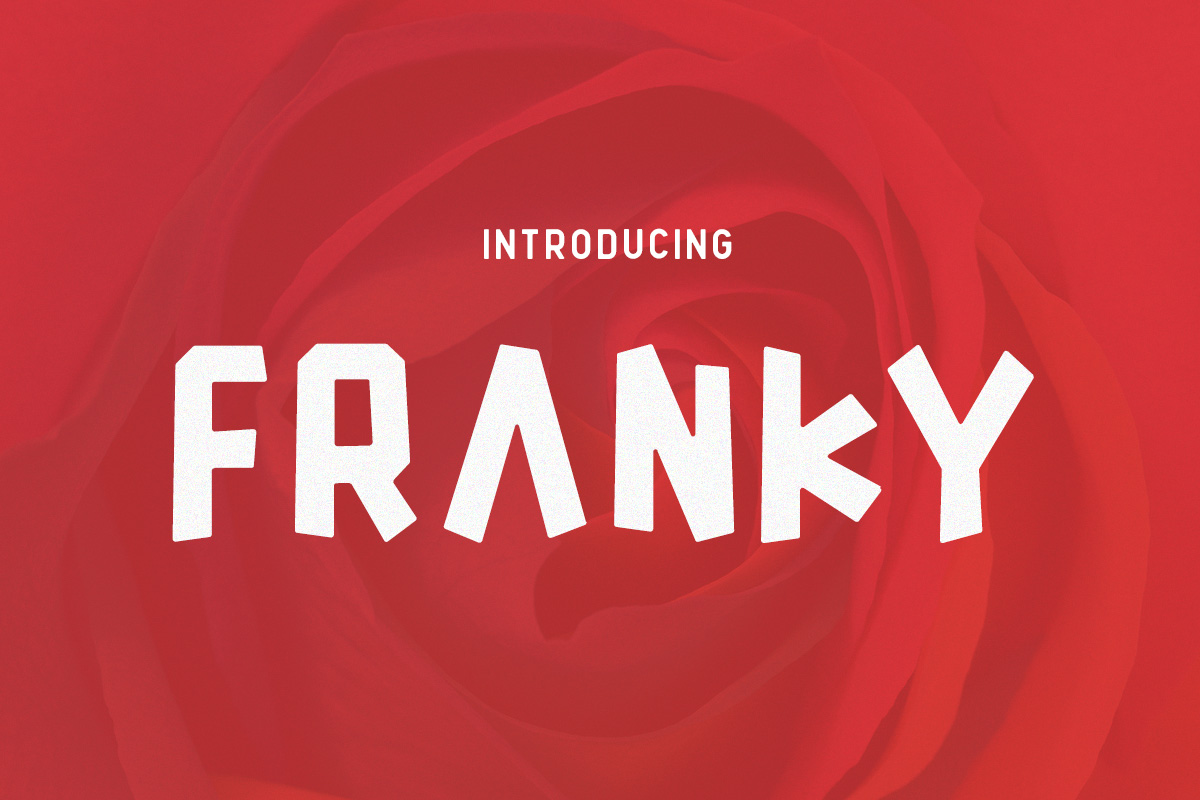
Franky: A Blocky Font with Bold Character
Typefaces often blend into the background, designed to be read quickly and forgotten. Then there are fonts like Franky. It is a blocky, freestyle typeface built on uneven weighting and a confident presence. This is not a font for sprawling paragraphs of body text. It is made for statements—posters, headlines, logos, and any design where the letters themselves need to grab attention. The uneven structure gives it a handcrafted feel, as if each character was stamped onto the page. That raw quality opens doors for many kinds of projects, from professional branding to personal hobby work. Understanding what Franky offers and how it fits different needs can help you decide if it belongs in your toolkit.
What Makes Franky Stand Out?
Franky is not trying to be elegant or neutral. Its blocky forms are substantial, with variable stroke widths that create a sense of movement and imperfection. The uneven weighting means no two letters feel identical, even when repeated. This is deliberate. It gives the font a freestyle vibe while maintaining legibility at display sizes. For anyone working with visual communication, this balance between chaos and readability is where the value lies. The font does not require technical skill to use, but it rewards those who experiment with placement, color, and scale.
Because Franky carries such a distinct personality, it works best in situations where you want the text to become part of the visual design. It can anchor a layout or add attitude to a simple phrase. The lack of uniformity becomes a strength, making the words feel alive rather than machine-made. This is especially appealing in creative fields, but it also has practical applications for businesses and educators who need to cut through visual noise.
For Creators and Designers: A Tool with Built-In Attitude
If you design posters, album covers, social media graphics, or merchandise, Franky offers a shortcut to a specific mood. Its blocky, uneven shapes suggest street art, indie zines, or underground music scenes. You can use it to type out a band name, a festival date, or a call to action and instantly set a tone. The variable weighting works particularly well when combined with textures or overlays. For example, placing Franky over a gritty photo or a patterned background emphasizes its hand-drawn quality.
Beginners in design can use Franky without needing deep typography knowledge. You can drop it into a project and it immediately adds character. More experienced designers might push the font further—adjusting kerning, layering it with other typefaces, or using it as a starting point for custom lettering. Franky’s uneven geometry leaves room for interpretation. You can lean into the roughness or clean it up with tracked-out letters. The flexibility is there, but the font does the heavy lifting in terms of personality.
A practical example: A freelance illustrator creating posters for a local event. Using Franky for the headline adds urgency and grit. Pair it with a simple sans-serif for details, and the contrast creates a hierarchy that feels curated but not overworked.
For Business Owners and Marketers: Standing Out Without Gimmicks
Small business owners and marketers often face the challenge of being heard in crowded spaces. Franky can help with that, but it requires thoughtful placement. This font is not suitable for every brand. If your business is tied to luxury, precision, or quiet professionalism, Franky may feel too loud. However, for brands that thrive on energy—think coffee shops, skateboard shops, creative agencies, or food trucks—Franky can become a visual signature.
Used in headers on a website, on chalkboard menus, or in limited-edition packaging, it signals a willingness to break from the ordinary. The uneven weighting catches the eye, which is exactly what you need in a fast-scrolling feed or a busy storefront. For marketers, the priority is usually speed of recognition. Franky delivers that because it does not look like default corporate type. It feels intentional, even when used sparingly.
Consider an entrepreneur launching a line of streetwear. Using Franky on tags, lookbooks, and social media posts ties the product to a specific aesthetic without needing a custom typeface. The font becomes a cost-effective branding element. For a blogger in the lifestyle or DIY space, Franky can highlight section titles or quotes, adding a personal, unpolished touch that readers often trust more than slick, overproduced visuals.
For Educators and Hobbyists: Learning Through Experimentation
Educators teaching design fundamentals can use Franky as an example of expressive typography. Its irregularities make it easy to discuss concepts like weight, contrast, and legibility. Students can see how altering a single letter’s shape changes the overall feel. For hobbyists—whether scrapbooking, making cards, or decorating a personal space—Franky offers a way to add bold text without needing design software mastery. It works with simple tools like word processors and photo editors.
Hobbyists often prioritize ease of use and cost. Franky, especially if available as a free or low-cost download, removes barriers to creative experimentation. You can download it, install it, and immediately start making signs, labels, or art prints. The uneven weighting means every project looks slightly different, which keeps the process engaging. For someone learning graphic design on their own, Franky is a forgiving font. It doesn’t require precise alignment because its nature is already irregular. That reduces frustration for beginners.
Practical use: A teacher making classroom posters for an event or a student working on a zine project. Franky brings energy without needing complex layout skills. The font itself does a lot of the expressive work.
Priorities to Consider Before Choosing Franky
Deciding whether Franky fits your project means looking at your own priorities. The font shines in display contexts, but it has limitations. Here are a few factors to weigh depending on your role.
- Ease of use: Franky is straightforward to install and apply. No technical hurdles. Beginners can get results quickly. For professionals, the challenge is in pairing and scaling it effectively.
- Cost: If Franky is free or reasonably priced, that makes it accessible for budget-conscious creators and small businesses. High cost might only be justified for commercial licenses in large-scale branding.
- Quality and reliability: The font needs to render cleanly at different sizes. Test it on screens and prints to ensure the uneven weighting does not compromise legibility at the scale you need. Some audiences—like those reading website headers—still need to read the words at a glance.
- Flexibility: Franky is specialized. It does one thing well: bold statements. If your project requires a range of weights or styles, you may need to supplement it with other fonts. Think of it as a strong accent, not the whole wardrobe.
- Long-term usefulness: Trend-driven fonts can date quickly. Franky’s freestyle look leans into a specific aesthetic. Consider whether that aesthetic aligns with your ongoing projects or if it is more for short-term campaigns.
Practical Tips for Getting Started with Franky
Once you have downloaded Franky, start with small experiments. Try it on a single headline or a simple quote. See how it interacts with different backgrounds. Light colors on dark or textured surfaces often bring out the uneven weighting best. Avoid using Franky for entire sentences in small sizes—it may become hard to read. Instead, reserve it for words or short phrases that need impact.
Pair Franky with a clean, neutral font for body text. This creates contrast without competing. For digital projects, check how the font renders on various devices. Some blocky fonts with uneven strokes can lose clarity at low resolutions. Print it out if possible, because the tactile nature of the font often feels different on paper.
For hobbyists working on personal projects like party invitations or room decor, use Franky as the title and keep the rest simple. For professionals, consider using Franky as part of a larger system—combining it with geometric shapes, patterns, or photography to build a cohesive visual language.
Is Franky Right for Your Goals?
Franky is not a universal answer. It works best when you need a font that brings its own energy. If your goal is clear, fast readability in a long document, look elsewhere. If your goal is to stop a reader’s eye and set a mood, Franky can do that efficiently. Beginners will appreciate how much personality it adds with little effort. Experienced users can exploit its quirks for more nuanced designs.
Evaluate your project type. Content marketing materials for a playful brand? Yes. A formal annual report? Probably not. Personal blog headers or a hobby project that needs a spark? Absolutely. The font’s value comes from its ability to signal authenticity and creative risk. For audiences in your target age range, that kind of visual language can build trust and interest. Franky lets you communicate without overcomplicating the design process. If you are ready to experiment with blocky, uneven forms that carry weight, it may be the right addition to your font collection.