Django: The Retro Display Font with Modern Versatility
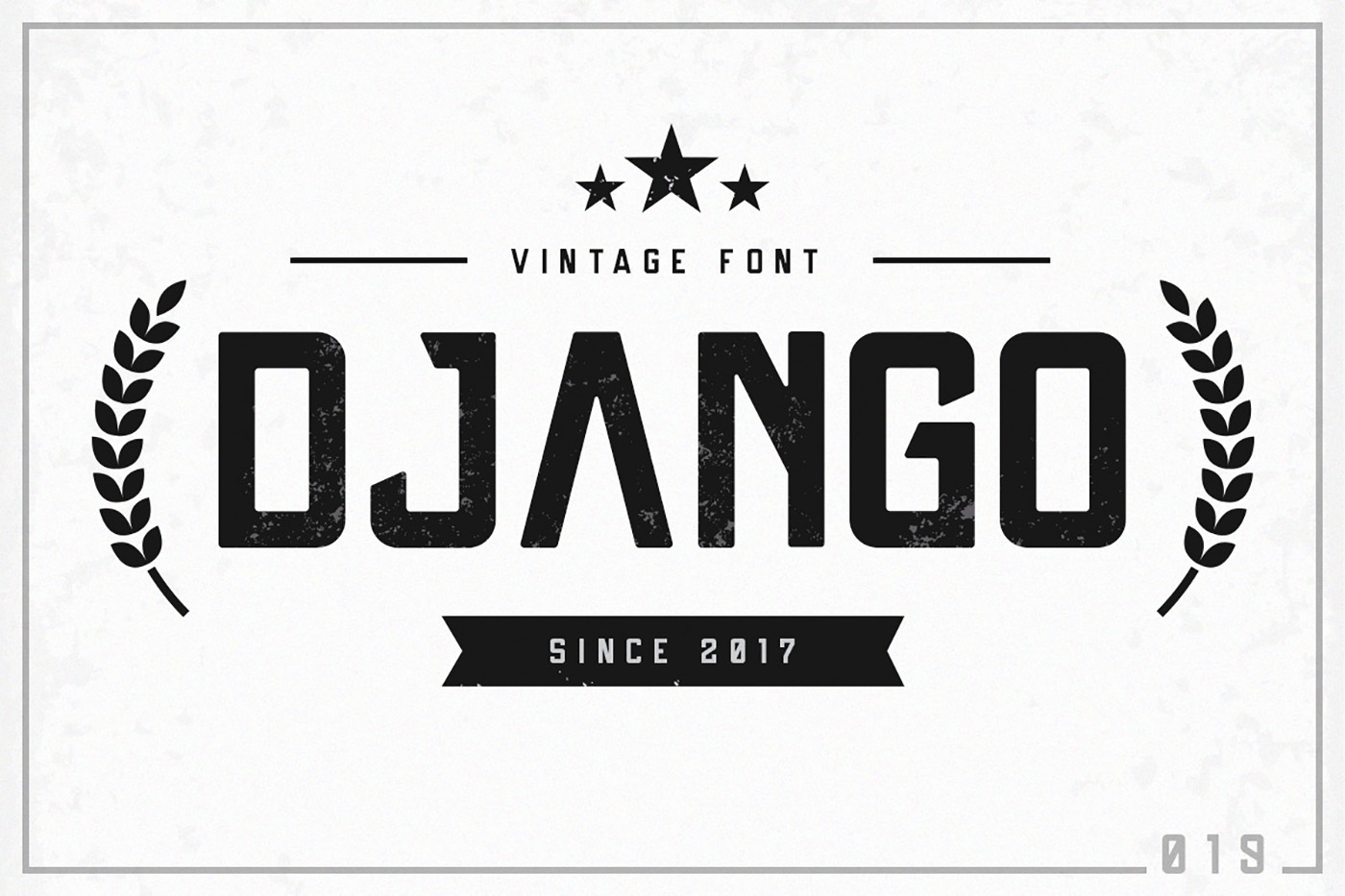
If you’ve been searching for a typeface that feels both nostalgic and fresh, Django is worth your attention. It belongs to that rare category of display fonts that manage to reference the past without feeling dated. With a robust weight and a clean sans serif structure, it brings a sense of boldness and clarity to any project. But what really sets Django apart is how adaptable it is. While it draws from retro design cues, it fits comfortably into contemporary layouts, making it a practical choice for a wide range of work.
Let’s explore what Django offers, why you might want to use it, and how you can make the most of it in your own projects.
What Makes Django Different from Other Retro Fonts
Many retro fonts lean heavily into ornamentation, distressed textures, or exaggerated curves. Django takes a different path. Its strength comes from balance rather than decoration. The letterforms are substantial without being heavy, and the clean sans serilines keep everything readable even at larger sizes. This makes it a solid choice for headlines, logos, and branding pieces where you need impact without clutter.
Django captures the spirit of mid-century design and the bold typography of the 70s and 80s, but it doesn’t try to imitate a specific era too literally. Instead, it distills those influences into something that feels purposeful and modern. That’s why it works equally well on a vintage-inspired poster and a minimalist website header.
A Font That Works Across Different Skill Levels
One of the things you’ll appreciate about Django is that it doesn’t require deep typography knowledge to use effectively. If you’re a beginner, you can drop it into a design and immediately see a transformation. The bold weight handles itself, so you don’t need to fuss with layering or effects to make it stand out. For professionals, Django offers enough nuance to build sophisticated brand systems around it. Its simplicity is a strength, not a limitation.
Who Benefits from Adding Django to Their Toolkit
Django suits a surprisingly broad audience. Here’s a look at who might find it especially useful:
- Small business owners and entrepreneurs who need a logo or signage that feels confident and approachable. Django brings personality without looking amateurish.
- Bloggers and content creators who want a distinctive header font that makes their content instantly recognizable. A consistent typeface helps build brand identity over time.
- Freelancers and designers working on branding projects, posters, or social media graphics. Django gives you a reliable option when the brief calls for bold, clean typography with a hint of nostalgia.
- Educators and hobbyists creating handouts, presentations, or event flyers. The font’s readability at larger sizes means your message stays clear even from a distance.
- Marketers producing campaign materials that need to grab attention quickly. Django’s strong presence works well in ads, banners, and promotional headlines.
Practical Ways to Use Django in Real Projects
Let’s move beyond theory and look at concrete scenarios where Django shines.
Branding and Logo Design
Imagine you’re helping a friend launch a coffee shop with a mid-century modern vibe. The logo needs to feel warm, established, and slightly playful. Django can anchor that identity beautifully. Use it for the main wordmark, then pair it with a lighter sans serif for taglines and menu copy. The result feels cohesive without being overly themed.
For an entrepreneur starting a consulting practice, Django signals professionalism with character. It says the business is grounded and forward-looking at the same time. That’s a hard combination to pull off, but Django does it naturally.
Posters and Event Flyers
Whether you’re promoting a concert, a community event, or a workshop, you want the headline to be the first thing people see. Django’s robust weight ensures it reads well at a distance. Try setting the event name in Django and use a secondary font for details like date and location. It’s a simple formula that works every time.
Website Headers and Digital Content
Django is not just for print. On a website, it can serve as the primary heading font for hero sections, blog titles, or product names. Because it’s clean and bold, it holds up well on screens of all sizes. When paired with a neutral background, it creates a strong focal point without extra ornamentation. This makes it ideal for landing pages where speed and clarity matter.
Social Media Graphics
If you’re creating Instagram posts, YouTube thumbnails, or LinkedIn banners, Django helps your text stand out in a crowded feed. Its retro feel adds warmth to digital content, which is often dominated by cold, minimal typefaces. A quote card or announcement set in Django feels human and intentional.
Merchandise and Packaging
For small product lines, Django works well on t-shirts, mugs, or tote bags. It scales down nicely while retaining its character. Packaging for artisanal goods, such as candles, sauces, or stationery, can also benefit from Django’s blend of sturdy form and clean lines.
What to Consider Before Choosing Django
Like any tool, Django has strengths and ideal use cases. Being aware of these will help you get the most out of it.
Pairing with other fonts. Django is a display font, which means it’s best for headlines and short text. For body copy, pair it with a straightforward sans serif like a clean geometric or a classic serif. This contrast keeps your design balanced. Avoid pairing it with another bold display font, as that can create visual competition.
Spacing and layout. Because Django has a sturdy presence, give it room to breathe. Plenty of white space around your headings will let the letterforms do their work. Crowding them with other elements reduces impact.
Context matters. Django’s retro character is versatile, but it may not suit ultra-modern or minimalist projects that call for neutered, neutral typefaces. If the goal is to feel cold and corporate, you might choose something else. For projects that want warmth, personality, or a nod to the past, Django is a strong candidate.
Legibility at small sizes. While Django excels at medium to large sizes, it may not be ideal for tiny captions or footnotes. Its bold weight can lose clarity below a certain point. Reserve it for elements where you want attention, and let simpler fonts handle the smaller details.
Making Django Part of Your Creative Process
Adding a new font to your collection is more than an acquisition. It’s about expanding your problem-solving options. When a project calls for strength, character, or a touch of nostalgia, Django is ready to step in. It doesn’t try to be everything, which is exactly why it works so well in so many situations.
If you’re a freelancer, experiment with Django on a personal project first. See how it behaves in different sizes, colors, and pairings. That experience will give you confidence when you apply it to client work. Bloggers can use it to rebrand their site header and see how it changes the feel of their entire page. Small business owners can test it on a single flyer before committing to a full brand update. These small experiments often reveal a font’s true range.
A Font That Bridges Eras
Django’s real value is its ability to connect different design sensibilities. It honors the past but lives comfortably in the present. That’s a rare quality in a display font. Whether you’re designing for a local business, a creative project, or your own brand, Django offers a reliable way to add visual weight and personality. It doesn’t demand a lot of extra work, and it rewards thoughtful use.
So if you’re looking for a typeface that brings warmth, strength, and flexibility, consider Django. Add it to your collection and see what it does for your next project. You might find it becomes one of those go-to fonts you reach for whenever you need something that just works.