Barakah: A Victorian-Inspired Display Font with Timeless Appeal
Some typefaces feel like they belong on a weathered sign above a century-old apothecary. Others scream for attention on a concert poster. Then there are fonts like Barakah, which manage to do both at once. This multi-layered Victorian display font brings together romantic flourishes, bold structure, and painstaking detail in a way that feels both antique and refreshingly current. If you have ever struggled to find a typeface that bridges vintage charm with modern versatility, Barakah might be the missing piece in your design toolkit.
What Makes Barakah Stand Out
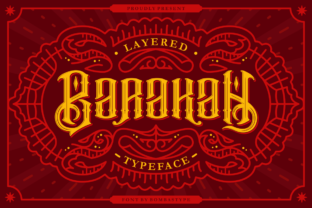
At first glance, Barakah announces itself with confidence. Its Victorian roots are unmistakable—think ornate curves, dramatic contrast between thick and thin strokes, and a decorative flair that recalls the elaborate typography of the late 19th century. But what sets this display font apart is its layered construction. You are not limited to a single static design. Instead, Barakah offers multiple layers that can be stacked or used independently, giving you control over depth, shadow, color, and texture.
The personality of this typeface is simultaneously romantic and assertive. It carries the warmth of vintage letterpress posters and the elegance of handwritten invitations, yet it does not shy away from making a statement. The letterforms are meticulously crafted, with swashes, terminals, and details that reward close inspection. This is a font that does its best work when given room to breathe—on a poster, a book cover, a logo, or a packaging design where every curve can be appreciated.
For designers who work in brand identity, Barakah offers something rare: a distinct voice. Many serif fonts lean formal or academic. Many script fonts lean casual or whimsical. Barakah occupies a middle ground that feels both authoritative and approachable, making it suitable for projects that need personality without sacrificing readability.
Where Barakah Shines Across Projects
Because Barakah is a multi-layered display font, its natural habitat is anywhere you need text to command attention. Here are some of the most effective applications I have seen and tested:
Logo Design and Brand Identity
Barakah works exceptionally well for businesses that want to telegraph heritage, craftsmanship, or luxury. A coffee roastery, a boutique bakery, a whiskey distillery, a wedding planning service, or a vintage clothing shop could all benefit from its distinctive look. The layering feature is especially useful here: use one layer for the primary mark and another for shadows or accents, creating a logo that feels dimensional without relying on extra graphic elements. This approach also simplifies scaling across print and digital touchpoints.
Editorial and Packaging Design
Magazine covers, book spines, product labels, and specialty packaging all demand type that stops the eye. Barakah delivers on that front. In editorial design, it works beautifully for headlines, pull quotes, and section openers. For packaging design, it can anchor a label design or serve as the hero element on a box or bottle. The Victorian aesthetic pairs naturally with kraft paper, foil stamping, embossing, and other tactile finishes. If you are designing for a brand that values authenticity and detail, Barakah aligns with that ethos.
Social Media Graphics and Web Design
It might seem counterintuitive to use an ornate Victorian font on digital platforms, but Barakah holds up surprisingly well. On social media, it excels in quote cards, announcement graphics, and campaign headers where you want a strong visual hook. In web design, use it sparingly—reserve it for hero sections, navigation headers, or call-to-action buttons where its personality can land without overwhelming the layout. Pair it with a clean sans serif font for body text to maintain readability on smaller screens.
Wedding and Event Stationery
Given its romantic formation and attention to detail, Barakah is a natural fit for invitations, save-the-dates, place cards, and programs. The layered aspect allows you to create elegant, multi-color designs without needing additional illustration. For event branding across signage, menus, and favors, Barakah provides a cohesive and memorable visual thread.
How Barakah Influences Readability, Hierarchy, and Brand Perception
Any experienced designer knows that modern typography is about more than just looking good. It shapes how people read, what they notice first, and how they feel about a brand. Barakah influences these factors in specific ways worth understanding.
Readability: Because Barakah is an ornate display font, it is not designed for long body copy. Use it for short phrases, headlines, titles, and key messages. At larger sizes, the letterforms remain legible and the decorative details become assets rather than distractions. For any supporting text, pair it with a neutral serif font or sans serif font to create contrast and give the eye a place to rest.
Visual hierarchy: Barakah naturally commands the top level of any hierarchy. Its bold formation and romantic curves draw the eye immediately. When you layer it with secondary and tertiary type, you create a clear path for the viewer: ornate headline first, then supporting headline, then body copy. This rhythm is essential for posters, landing pages, and advertising where you have only seconds to communicate your message.
Brand perception: A typeface like Barakah signals care, tradition, and craftsmanship. Brands that use it are perceived as established, thoughtful, and detail-oriented. This can be a strategic advantage for businesses competing in saturated markets where differentiation is key. For a new brand, pairing Barakah with a modern layout or minimalist color palette creates an interesting tension that feels fresh rather than dated. For heritage brands, it reinforces authenticity and trust.
Consistency and professionalism: Using Barakah across all brand touchpoints—from your website header to your product packaging to your social media graphics—builds visual consistency. Over time, that consistency becomes recognition. Your audience starts to associate that distinctive Victorian silhouette with your brand alone.
Practical Guidance for Choosing and Using Barakah
Before you add Barakah to your collection, consider a few practical factors that will help you get the most out of this premium font.
Evaluate Project Fit
Barakah is not a one-size-fits-all typeface. Ask yourself: Does your project benefit from a vintage, romantic, or authoritative tone? Are you designing for a short-form application where ornate details can be appreciated? If the answer to both questions is yes, Barakah is likely a strong choice. For minimalist brands, tech startups, or projects requiring maximum neutrality, you might be better served by a clean handwritten font or a subdued sans serif font.
Test Font Pairings Early
Font pairing can make or break a design. With Barakah, I recommend testing it against simple, clean companions. A geometric sans serif like a classic helvetica-style face often works well, as does a subdued serif with low contrast. Avoid pairing Barakah with another ornate font—the result is usually visual chaos. Instead, let Barakah be the star and give it room to perform. Test your pairings at different sizes and on different backgrounds before committing.
Review the Included Styles and Layers
One of Barakah’s strengths is its multi-layered structure. Before you start a project, explore all the layers included in the font package. Understand which layers work as shadows, which serve as fills, and how they interact when stacked. This upfront exploration will save you time later and might inspire creative applications you had not considered.
Consider Readability at Different Scales
Test Barakah at the sizes you intend to use. At very large sizes, the decorative details become dramatic and engaging. At smaller sizes, especially below 24 points, some of the finer details may blur or become difficult to read. For applications like social media graphics viewed primarily on mobile, keep your text large and your message short. For print applications, pay attention to stroke thickness and ensure there is enough contrast against the background.
Check Commercial Licensing
If you are using Barakah for client work, merchandise, or any commercial activity, make sure you have the appropriate commercial font license. This is a standard step with any premium font, but it is worth mentioning because multi-layered fonts sometimes have different licensing terms for each layer. Read the license carefully to avoid surprises down the road.
Final Thoughts on Adding Barakah to Your Work
Every designer and creative professional builds a personal library of typefaces that they return to again and again. These are the fonts that solve problems, inspire new directions, and give projects a distinctive voice. Barakah deserves a place in that library if you value detail, versatility, and a strong visual personality.
Whether you are designing a brand identity for a local distillery, creating packaging for an artisanal product line, or developing social media assets for a heritage-inspired campaign, Barakah offers the kind of layered richness that elevates work from good to memorable. It is a creative font that rewards experimentation and pays attention to the small things—the same small things that your audience may not notice consciously, but that make them trust your design and engage with your message.
Add Barakah to your design assets today and discover how a Victorian-inspired typeface can bring both history and freshness to your next project. It is one of those rare finds that feels both timeless and necessary.