Think TH NK: A Playful Typeface That Breaks the Rules
Typography is often treated as a serious discipline, governed by strict rules about legibility, spacing, and hierarchy. Yet every so often, a typeface comes along that reminds us that fonts can be fun, expressive, and even a little rebellious. Think TH NK, also known simply as TH NK, is exactly that kind of typeface. Designed by Carolina Valtuille, this font defies convention with its quirky shapes and unconventional letterforms. It does not try to blend in or whisper quietly on the page. Instead, it demands attention, invites curiosity, and asks the viewer to pause and look a little closer.
What makes Think TH NK so distinctive is not just its visual style but the thinking behind it. The name itself suggests a playful twist on the word “think,” with the missing vowels hinting at something incomplete, open-ended, and full of possibility. It is a font that encourages creativity rather than strict adherence to typographic norms. For designers looking to inject personality into their work, this typeface offers a refreshing departure from the safe, predictable choices that dominate so much of modern visual communication.
The Design DNA of TH NK
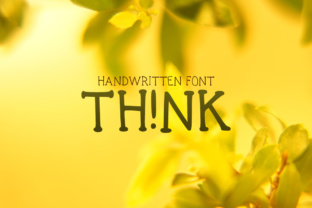
Carolina Valtuille designed TH NK with a clear intention: to create something that feels handcrafted, spontaneous, and slightly irregular. The characters are not perfectly uniform. Some letters lean, others stretch, and a few appear to have been drawn with a careless flick of the wrist. But that apparent carelessness is deliberate. Each glyph carries a sense of movement and energy, as if the letters were sketched in a hurry by someone who had too many ideas and not enough time.
The font works particularly well at display sizes, where its idiosyncrasies can be fully appreciated. At smaller sizes, some of the finer details may get lost, but that is not really what TH NK is for. It is a headline font, a poster font, a font for moments when you want the text itself to become the visual centerpiece. The uneven stroke weights, the playful ascenders, and the occasional unexpected curve all contribute to a sense of handmade warmth that digital fonts often lack.
One of the most notable characteristics of Think TH NK is its emotional range. Despite its playful appearance, it can convey a surprising number of moods depending on how it is used. Paired with bold colors and chaotic layouts, it feels energetic and irreverent. Combined with minimal design and plenty of white space, it takes on a more whimsical, almost nostalgic quality. This versatility is rare in novelty fonts, which often only work in one specific context.
What Makes a Font “Fun” Without Being Frivolous
There is a common misconception that fun fonts are not suitable for serious projects. Many designers hesitate to use playful typefaces because they worry the result will look unprofessional or childish. But Think TH NK challenges that assumption. It proves that a font can be lighthearted without being silly, and distinctive without being distracting. The key lies in how it is applied.
For example, think about a coffee shop branding project. A sleek sans-serif might communicate efficiency, but it does little to convey warmth or individuality. Using Think TH NK on the shop’s signage or menu boards instantly creates a sense of personality. It tells customers that this is not a generic chain but a place with character. The same principle applies to event posters, album covers, social media graphics, and even editorial design. The font adds a layer of human touch that sterile typography cannot replicate.
Carolina Valtuille understood that fun does not have to mean chaotic. The letters in TH NK maintain enough structure to remain readable, even when they bend the rules. The lowercase “a” is a great example: it is not the standard double-story form, nor is it the simple circle-and-stem of a handwritten “a.” Instead, it sits somewhere in between, with a shape that feels both familiar and unexpected. That is the sweet spot where playful design becomes genuinely effective.
Where Think TH NK Fits in Modern Workflows
In today’s design landscape, versatility is everything. Projects move between print and digital, between large displays and small screens, between static layouts and animated graphics. A font like Think TH NK needs to hold up across all these contexts, and it generally does, provided it is used thoughtfully.
For digital design, TH NK works beautifully in hero headers, banner ads, and social media posts where the goal is to stop the scroll. Its irregular shapes create visual friction, which is exactly what you want when competing for attention in a crowded feed. It pairs well with neutral, simple fonts for body text, creating a clear contrast between the headline and the supporting copy. A good rule of thumb is to let TH NK be the star and keep everything else understated.
In print, the font shines on posters, flyers, and book covers. It can also be effective in packaging design, especially for products aimed at younger, creative audiences. The handmade quality of the typeface aligns well with artisanal or indie brands that want to emphasize craftsmanship and authenticity. Even in editorial layouts, a single word or phrase set in Think TH NK can serve as a visual anchor that breaks up blocks of text and adds rhythm to the page.
Motion design is another area where this font performs surprisingly well. Because the characters already have a sense of movement built into their forms, animating them feels natural. A simple bounce or wiggle effect can amplify the playful energy of the typeface without needing complex keyframes. For explainer videos, animated logos, or title sequences, TH NK offers a distinctive look that stands out from the usual motion graphics fonts.
Practical Considerations Before Using TH NK
Every typeface has limitations, and Think TH NK is no exception. Its unconventional design means it is not suitable for long-form reading. Body text set in this font would quickly become tiring to the eyes, and the irregular letters could cause readability issues, especially for people with visual impairments. It is best reserved for short, impactful passages where each word carries weight.
Another factor to consider is brand consistency. If you are working on a project that requires a cohesive identity across many touchpoints, relying too heavily on a novelty font can be risky. A better approach is to use TH NK as an accent typeface rather than the primary one. Let it appear in select places—a logo, a tagline, a recurring headline style—while using a more neutral font for the bulk of the text. This gives the brand personality without sacrificing professionalism.
Licensing is also worth mentioning. Before using Think TH NK in commercial projects, check the license terms. Some designer fonts have restrictions on usage in certain media or require additional fees for broad distribution. Making sure you have the proper rights avoids headaches later and supports the work of independent type designers like Carolina Valtuille.
Pairing Think TH NK with Other Fonts
One of the most enjoyable aspects of working with a distinctive typeface is finding the perfect companion fonts. Because TH NK is so expressive, it pairs best with restrained, simple fonts that do not compete for attention. Clean sans-serifs like Helvetica, Open Sans, or Montserrat create a nice balance, allowing the headline to pop while the body text remains calm and readable. Serif fonts can also work, especially if they have a classic, understated feel. The contrast between a traditional serif and the playful TH NK can produce a sophisticated, layered look.
Color choices matter too. Think TH NK tends to look best against solid, uncomplicated backgrounds. Busy patterns or heavily textured surfaces can clash with the font’s irregular shapes and make the text hard to read. Using plenty of contrast between the type and its background helps preserve legibility while letting the font’s personality shine. Monochromatic palettes or bold, single-color treatments often work better than complex gradients or multi-color schemes.
Avoiding Common Mistakes
When designers first discover a fun font like TH NK, the temptation is to use it everywhere. That is usually a mistake. Overusing a novelty font can make a design feel gimmicky rather than creative. The font loses its impact when it appears too frequently. Reserve it for moments that truly benefit from its energy. Ask yourself: does this specific piece of text need to stand out, or would it be better served by something more restrained? If the answer is the latter, save TH NK for another project.
Another common pitfall is neglecting kerning and letter spacing. Because Think TH NK has irregular shapes, the default spacing may not always look right, especially at larger sizes. Manually adjusting the tracking and kerning can make a huge difference in how polished the final result appears. It is worth spending extra time fine-tuning the spacing to ensure the letters sit well together.
The Broader Appeal of Playful Typography
The success of Think TH NK reflects a larger trend in design toward authenticity and human connection. In an era of AI-generated content and hyper-polished visuals, audiences are drawn to things that feel real, imperfect, and handmade. Playful typography satisfies that craving. It reminds us that design does not have to be clinical to be effective. It can be warm, surprising, and deeply personal.
Carolina Valtuille’s creation fits perfectly into this movement. TH NK is not trying to be the next universal typeface. It is not trying to replace Helvetica or Futura. It exists for a different purpose: to add joy, character, and a sense of play to the projects that use it. For designers who understand when and how to deploy such a tool, it can be enormously rewarding.
Whether you are working on a branding project for a small business, designing a poster for a local event, or simply experimenting with typography for your own creative satisfaction, Think TH NK offers a fresh perspective. It encourages you to think differently about what letters can do. It invites you to take risks, break rules, and have a little fun along the way. And in a world where so much design plays it safe, that kind of invitation is worth accepting.