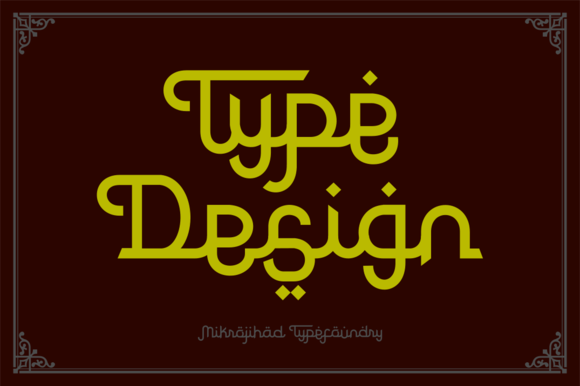
Rodja Script: Where Arabic Elegance Meets Latin Versatility
Typography has a way of shaping how we perceive a message before we even read a single word. The Rodja Script font belongs to that rare category of typefaces that manages to feel both timeless and fresh at the same time. It draws directly from the high style of Fusha Arabic, known for its elegant, flowing structure and intricate system of conjugations, yet it pairs those classical forms with Western Latin characters. The result is a script that feels culturally rich without sacrificing readability for a global audience.
If you have ever struggled to find a typeface that bridges two visual worlds gracefully, Rodja deserves a closer look. It does not try to be everything at once. Instead, it brings a specific, refined aesthetic that works across personal projects, commercial work, and everything in between.
What Makes Rodja Script Distinctive
Rodja is not another generic decorative font. Its foundation in Fusha gives it a disciplined elegance. Fusha Arabic is the formal, literary register of the language, known for its precise calligraphic traditions and complex grammatical flow. Rodja captures that spirit visually, even when rendering Latin letters. The strokes carry a subtle curvature and rhythm that echo Arabic script, without forcing the letters to look like a direct transliteration.
Key characteristics that stand out:
- Fluid letterforms that maintain legibility even at smaller sizes
- Balanced contrast between thick and thin strokes, giving it a handcrafted feel
- Cultural resonance that works well for projects with Middle Eastern, North African, or Islamic themes
- Versatile weight that supports both display and body text applications when sized appropriately
Unlike many script fonts that lean heavily into ornamentation at the expense of clarity, Rodja keeps its decorative elements intentional. Each letter connects naturally to the next, creating a rhythmic flow that feels organic rather than mechanical. This makes it a strong candidate for projects where you need personality without sacrificing professionalism.
Practical Applications Across Fields
Where does Rodja actually shine? Based on real-world use, it tends to perform exceptionally well in a few key areas.
Branding and Identity Work
For businesses targeting audiences that appreciate cultural depth, Rodja offers a visual shorthand. A restaurant serving Middle Eastern cuisine, a fashion brand inspired by North African textiles, or a consultancy focused on cross-cultural communication can all use Rodja to signal authenticity. The font carries an implied story that resonates with people who recognize the Fusha influence, while remaining accessible to those who do not.
Consider a logo for a boutique hotel in Marrakech. Using Rodja for the wordmark immediately communicates a sense of place and tradition, without needing additional visual cues. Pair it with a clean sans-serif for supporting text, and you have a cohesive identity that feels intentional rather than clichéd.
Editorial and Publishing
Magazines, books, and digital publications covering art, culture, travel, or design can use Rodja for headings, pull quotes, or chapter titles. Its rhythmic quality adds personality to layouts that might otherwise feel flat. The font also works well for poetry collections, especially those that touch on themes of heritage, identity, or cross-cultural exchange.
One practical observation: because Rodja carries a strong voice, it works best in short bursts. Full paragraphs set in Rodja can feel heavy, but a well-placed heading or highlighted quote draws the eye and sets the tone for surrounding content.
Event Materials and Invitations
Weddings, cultural festivals, gallery openings, and private dinners benefit from Rodja's blend of elegance and warmth. It suits formal events that still want to feel approachable. Think wedding invitations with a modern Arabic-inspired theme, or program booklets for a film festival showcasing works from the Arab world. The script adds a layer of sophistication that standard serifs or sans-serifs cannot replicate.
Digital Applications and User Experience
Rodja holds up well in digital contexts when used intentionally. Website headers, social media graphics, and email newsletters all benefit from its distinctive look. However, there are practical considerations to keep in mind.
Legibility on smaller screens can be a challenge with any script font. Rodja performs better at medium to large sizes, so reserve it for headings and accent text rather than body copy. On mobile devices, test your layouts carefully. What looks elegant on a desktop monitor can become cramped on a phone screen if the font size is too small or the line spacing is too tight.
For user experience, consider contrast. Rodja's stroke variation means it pairs best with backgrounds that offer strong contrast. Light text on a dark background can work beautifully, but avoid low-contrast combinations that blur the letterforms. Dark charcoal or deep navy backgrounds with white or cream Rodja text create a sophisticated, readable combination.
Commercial and Marketing Considerations
If you are using Rodja for client work or commercial projects, understand what it communicates. This is a font that signals intentionality. Clients who choose Rodja are often looking for a visual identity that stands apart from mainstream, generic options. It works especially well for brands that want to emphasize craftsmanship, tradition, or cultural connection.
Marketers can use Rodja to create a sense of exclusivity or luxury. Limited edition packaging, premium product lines, and high-end service brochures all benefit from its refined aesthetic. The font carries an implied narrative of quality and attention to detail, which aligns well with brands that position themselves as artisanal or heritage-driven.
On the practical side, always check licensing before using Rodja in commercial applications. Some font licenses restrict usage in logos, merchandise, or digital products. Confirm the terms with the foundry or distributor to avoid legal issues down the line.
Getting the Most Out of Rodja
Typography is about context as much as the font itself. Rodja performs best when you respect its origins and design intent. Here are a few recommendations based on working with similar script fonts:
- Pair it with simplicity. Let Rodja carry the visual weight. Use minimal supporting design elements so the letterforms remain the focal point.
- Mind the spacing. Rodja's natural flow can be disrupted by tight letter spacing. Give each character room to breathe, especially in headings.
- Test across media. How Rodja looks on a glossy brochure versus a matte business card versus a backlit screen can vary. Always proof your final output medium.
- Consider your audience. If your primary audience has no cultural reference for Arabic script or Fusha, Rodja still works as an aesthetic choice, but pair it with clear, accessible supporting text to maintain communication clarity.
Why Rodja Deserves a Place in Your Toolkit
Every designer, creator, or business owner eventually builds a mental library of go-to fonts for specific moods and messages. Rodja earns its spot in that library because it offers something most script fonts do not: a genuine cultural anchor. It does not try to approximate calligraphy through gimmicks. It draws from a real, rich tradition and applies that influence to Latin letterforms with skill and restraint.
Whether you are designing a brand identity, laying out a publication, or crafting an invitation, Rodja gives you a way to say something visually that plain text cannot. It suggests depth, tradition, and care. And in a world where most communication happens through generic templates and stock fonts, that kind of distinctiveness is worth holding onto.
Try it on a project that matters to you. Start with a single heading or a logo concept. See how it changes the feel of your layout. You might find that Rodja becomes the bridge between two visual languages you did not realize you needed.