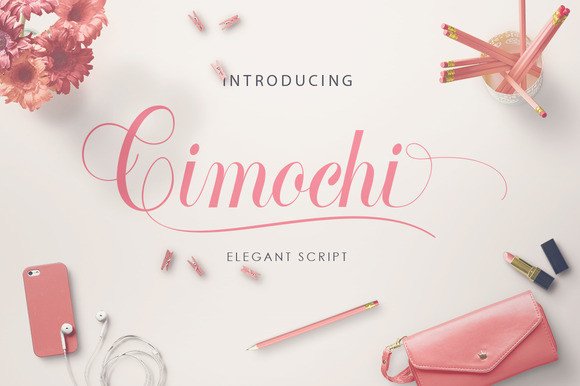
Cimochi: Evaluating a Bold Romantic Script Font for Your Design Projects
When you browse font libraries for a typeface that balances visual strength with emotional warmth, the options can feel surprisingly narrow. Many script fonts lean heavily into either delicate, whisper-thin strokes or overly rigid, formal structures. Cimochi enters this space as a script font that attempts something more nuanced: a bold yet romantic character that works for celebratory designs and any project where warmth and presence need to coexist. Understanding what this font offers, where it excels, and where it might fall short can help you decide if it fits your current work.
What Makes Cimochi Distinct in the Script Font Landscape
Cimochi is a script typeface defined by its confident stroke weight and distinctly romantic flourishes. Unlike many script fonts that prioritize either readability or decoration, Cimochi occupies a middle ground where both qualities are considered. The letterforms carry a noticeable thickness that gives them physical weight on the page or screen, yet the connecting strokes and terminal curves introduce softness and movement.
This dual character is relatively uncommon. Most bold fonts lean toward display or sans-serif categories, while romantic scripts typically use lighter, more delicate strokes to evoke elegance. Cimochi resists that expectation. Its boldness makes it legible at larger sizes and gives it a grounded presence, while its romantic details—curved ascenders, expressive swashes, and gently sloping baselines—keep it from feeling harsh or industrial. For designers who want a script that commands attention without sacrificing emotional tone, this combination is a practical advantage.
How Cimochi Compares with Other Romantic Script Options
When evaluating Cimochi, it helps to consider the broader category of romantic script fonts. Many popular scripts in this space fall into one of two camps: lightweight calligraphic faces that resemble pointed pen lettering, or bouncy, casual scripts that prioritize playfulness over formality. Cimochi does not fully belong to either group.
Compared to lightweight romantic scripts, Cimochi offers greater visual impact at smaller sizes and in digital formats where thin strokes can become difficult to read. Lightweight scripts often excel on high-quality print materials like wedding invitations or formal stationery, but they can lose their charm on screens or in less controlled media. Cimochi maintains its readability because its thicker strokes hold up across resolutions and backgrounds. This makes it a more versatile choice for projects that span both print and digital outputs.
Compared to bouncy, informal scripts, Cimochi reads as more intentional and refined. Bouncy scripts often rely on irregular letter heights and exaggerated alternates to create energy, but that same energy can feel mismatched with serious or romantic content. Cimochi, by contrast, keeps its baseline relatively stable and its letterforms consistent, which gives it a more polished and trustworthy appearance. If your project requires romance without whimsy, Cimochi is likely a stronger fit than its more playful counterparts.
Strengths and Tradeoffs of Choosing Cimochi
Every typeface involves tradeoffs, and Cimochi is no exception. Recognizing both sides helps you use it where it performs best.
Strengths
- Visual presence at multiple sizes. Because Cimochi uses bold strokes, it remains legible and attractive whether used for headlines, subheadings, or shorter body passages. You do not need to reserve it exclusively for large display use.
- Emotional range. The font manages to feel both romantic and confident. That combination works well for designs that need to express love or affection without appearing fragile or overly sentimental.
- Pairing flexibility. Cimochi pairs naturally with simple sans-serif fonts for contrast, and it can also work alongside geometric serifs if you want a more structured layout. Its moderate level of ornamentation means it does not overwhelm companion typefaces.
- Consistency across characters. Unlike some script fonts where certain letter combinations feel uneven, Cimochi maintains a uniform stroke weight and rhythm, which makes longer phrases easier to read.
Tradeoffs
- Limited formality ceiling. While Cimochi is romantic, it is not a formal script. For ultra-traditional wedding invitations, formal certificates, or corporate elegance, a lighter or more structured script may be more appropriate.
- Character count matters. In extended text settings, even a well-designed bold script can tire the eye. Cimochi works best in shorter passages where its personality can shine without overwhelming the reader.
- Swash availability. Depending on the version or weight you select, swash alternatives may be limited. If your design depends heavily on elaborate decorative alternates, you may need to check the specific font package before committing.
- Not ideal for dense layouts. Because the strokes are thick, Cimochi requires generous spacing. Crowding letters or placing it in tight layouts reduces its legibility and visual appeal.
Best-Fit Situations for Cimochi
Cimochi is well-suited to projects where you want a romantic feel but also need the design to hold its own in less controlled environments. Some realistic use cases include:
- Valentine’s Day marketing materials. Posters, social media graphics, product packaging, and email headers for Valentine’s Day can benefit from Cimochi’s bold romanticism. It stands out in feeds and on shelves without relying on pastels or delicate linework.
- Branding for lifestyle or boutique businesses. Small businesses in wedding coordination, floristry, bakery, or personal styling often need a font that signals care and personality without looking like every other brand. Cimochi offers distinction while remaining approachable.
- Greeting cards and gift tags. Short phrases, names, and messages benefit from the font’s readable boldness. Recipients can easily read the text, and the romantic tone matches the occasion.
- Event signage and banners. Because Cimochi holds up at larger sizes, it works for printed banners or digital event headers where you need warmth at a distance.
- Personal projects with emotional weight. Whether you are designing a save-the-date announcement, a photo overlay for a sentimental post, or a piece of wall art, Cimochi adds a crafted feel that feels intentional rather than generic.
When Another Font Style May Serve Better
Despite its strengths, Cimochi is not a universal solution. Recognizing the situations where a different choice makes sense is part of making informed design decisions.
Formal or traditional events. If you are designing for a black-tie wedding, a religious ceremony, or a formal corporate celebration, a classic calligraphic script with finer strokes and more conservative letterforms may better match the tone. Cimochi’s boldness could feel too casual or modern for these settings.
Extended reading material. For invitations with long paragraphs of text, or for any design where someone needs to read more than a few lines, Cimochi is not optimal. A readable serif or sans-serif with a script accent elsewhere in the layout would improve the user experience.
Minimalist or industrial themes. If your overall design leans toward minimalism, brutalism, or industrial aesthetics, Cimochi’s romantic character may clash. In these cases, a geometric sans-serif or a restrained slab serif would maintain consistency.
Projects requiring extreme versatility across weights. Cimochi, like many script fonts, does not offer the extensive weight ranges found in large typeface families. If your project needs everything from thin to black across multiple styles, you may need to consider a more comprehensive system and use a script as an accent rather than a primary voice.
Decision Factors When Choosing Cimochi
Before committing to Cimochi for a project, consider a few practical factors that affect how the font performs in your specific context.
Output medium matters. Cimochi works well in both print and digital, but the rendering quality can vary by platform. Test it on your target screens or paper stock before finalizing. What looks bold and romantic in a preview may behave differently when scaled or printed at lower resolution.
Pairing choices affect the outcome. The font pairs best with clean, simple counterparts. A neutral sans-serif like a modern grotesque or a geometric sans will let Cimochi lead the tone. Avoid pairing it with another heavily decorative font, as the design can quickly become cluttered and hard to read.
Swash and alternate character support. Some versions of Cimochi include stylistic alternates or swashes, while others may offer only the base character set. If you rely on decorative entries or endings for your design, confirm that the version you are using includes those features.
Licensing and usage rights. As with any commercial font, verify that your license covers your intended use, especially if the project involves commercial distribution, merchandise, or digital products. Licensing terms vary between foundries and platforms.
Audience expectations. Consider whether your audience associates bold script fonts with romance or with something else entirely. In some contexts, a bold script can read as playful or even assertive rather than romantic. Contextual testing with sample layouts can clarify whether the font delivers the message you intend.
Practical Compatibility and Pairing Considerations
Using Cimochi effectively often comes down to how you integrate it into a broader layout. The font is visually strong enough to carry a headline or a central message on its own, but it benefits from thoughtful support from secondary typefaces, spacing, and color.
For a typical layout, consider placing Cimochi in a prominent position such as a main heading or a featured quote, then setting supporting text in a neutral sans-serif. A light or regular weight sans-serif with moderate letter spacing provides contrast without competing. If you want a warmer palette, a soft serif with rounded edges can work, but keep the serif font simple to avoid visual noise.
Color choices also influence how Cimochi reads. On light backgrounds, dark versions of the font retain their romantic boldness. On dark backgrounds, a lighter color or metallic finish can soften the weight and emphasize the curves. Because the strokes are thick, the font handles color fills and gradients reasonably well, but test readability carefully when using low-contrast combinations.
Spacing is another area where Cimochi rewards attention. Generous tracking—slightly more than you might use for a lighter script—helps each letterform breathe and preserves the romantic flow. Tight spacing can make the font feel heavy and reduce the elegance of the connecting strokes.
Finally, consider whether your project includes multiple languages or special characters. Script fonts often have limited language support compared to standard sans-serif families. Check that Cimochi covers the characters you need before relying on it for multilingual designs.
Cimochi occupies a specific and valuable niche in the script font category. It provides a bold, romantic option for designers who need visual impact without sacrificing emotional warmth. By understanding its strengths, recognizing its tradeoffs, and pairing it thoughtfully, you can use Cimochi to create designs that feel both confident and caring—whether for Valentine’s Day campaigns, boutique branding, or personal projects that call for something with presence and heart.