Redgar Stencil: A Weathered Stencil Font for Authentic Design
When selecting a typeface for a project that demands raw character and a sense of history, the choice often narrows to fonts that break away from pristine perfection. Among these, Redgar Stencil stands out as a weathered stencil font that deliberately embraces imperfection. It is not simply a set of letters with cutouts; it is a typeface designed to evoke the wear and tear of industrial use, military stenciling, or aged signage. Understanding whether this font aligns with your design goals requires a practical evaluation of its characteristics, the contexts where it thrives, and the tradeoffs it brings.
What Defines Redgar Stencil
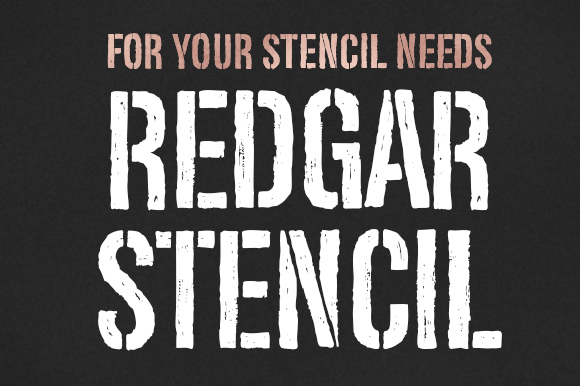
At its core, Redgar Stencil is a display typeface that mimics the appearance of letters sprayed, brushed, or stamped through a stencil plate. The “weathered” aspect means the letterforms include intentional irregularities: rough edges, faded ink effects, partially missing strokes, and a general texture that suggests prolonged exposure to the elements. Unlike clean stencil fonts that preserve sharp, uniform cuts, Redgar Stencil leans into a distressed aesthetic. Its letter spacing and proportions are typical of condensed stencil styles, making it suitable for headlines and short statements where impact matters.
Readers evaluating this font typically come from fields like graphic design, branding, merchandise creation, or event promotion. The appeal lies in how authenticity is communicated through visible decay. However, it is important to recognize that this is a specialty tool, not a workhorse for body text. Its design is intentionally rough, and that roughness carries both expressive power and practical limitations.
Why Designers Consider Redgar Stencil
Interest in Redgar Stencil often stems from a need to convey a specific mood or era. Projects with a military, industrial, or vintage theme benefit from its worn look. The font can instantly suggest grit, durability, or a bygone manufacturing age without requiring additional texture overlays or photo manipulation. It also works well when a designer wants a handmade feel that contrasts with the smoothness of modern digital interfaces.
Another reason for its popularity is its effectiveness in limited color palettes. Because the weathered details are built into the letterforms themselves, the font maintains visual interest even in single-color applications—for example, on t-shirts, posters, or product labels. This self-contained texture reduces the need for extra effects, saving production time and keeping file sizes manageable.
Key Benefits of Using Redgar Stencil
- Instant Character: The distressed details add depth and storytelling without extra design work.
- Versatile Across Media: Holds up well in print and on screen, especially at larger sizes.
- Cohesive Aesthetic: The weathered effect is consistent across all characters, creating a unified look.
- Efficient Production: Works as a standalone element for mockups or final art, reducing post-processing.
Tradeoffs and Practical Limitations
- Readability at Small Sizes: The rough edges and gaps can make lowercase or narrow characters hard to decipher below 18–24 pt.
- Not Suitable for Formal or Clean Contexts: The weathered style feels out of place in corporate, medical, or academic settings.
- Limited Character Set: Many distressed stencil fonts include only basic Latin characters and punctuation, though this may vary by version.
- Kerning Variability: The uneven edges can cause spacing quirks that require manual adjustment in layout software.
When Redgar Stencil Is a Strong Fit
Choosing Redgar Stencil works best when the project’s tone explicitly calls for a rough, utilitarian, or historical feel. The following scenarios are where it tends to excel:
Poster and Flyer Design: Event posters for gigs, festivals, or exhibitions that embrace a grunge or industrial style benefit from the font’s bold presence. It pairs naturally with high-contrast backgrounds and limited color schemes.
Branding for Artisanal or Industrial Products: Companies that manufacture tools, outdoor gear, or craft beverages often seek fonts that reflect durability and tradition. Redgar Stencil can appear on labels, packaging, or vehicle decals to reinforce a rugged identity.
Merchandise and Apparel: T‑shirt graphics, patches, and hats printed with stencil typography gain authenticity when the letters themselves appear worn. The font reduces the need for additional distressing effects in the print setup.
Movie or Game Titles: Short, impactful titles for film, video games, or web series that require a military or post‑apocalyptic vibe can use this font effectively. Its weathered quality instantly communicates genre without elaborate artwork.
Signage and Murals: For physical signs meant to look aged or part of a retro environment, Redgar Stencil offers a ready‑made solution. It fits painted wood, corrugated metal, or concrete surfaces.
In all these cases, the font is used at display sizes where its texture remains clear and intentional. The audience sees the wear as deliberate, not accidental.
When Alternatives Deserve Consideration
While Redgar Stencil has distinct advantages, there are situations where other typefaces may serve you better. Objective evaluation means acknowledging these scenarios.
When Legibility Is Paramount: If your text includes lengthy phrases, small print, or requires quick reading from a distance, a cleaner stencil font like Bebas Neue Stencil or Stencil Std might be more appropriate. These fonts retain the cutout aesthetic without the extreme distressing, improving character recognition.
When a More Versatile Family Is Needed: Redgar Stencil typically comes in one or two weights (regular, maybe bold). If your project needs a full type family with light, italic, and condensed versions, consider League Gothic Stencil or Oswald Stencil for broader flexibility in headings and subheadings.
When the Project Wants a Modern or Minimal Feel: The deliberate wear of Redgar Stencil may clash with sleek, contemporary branding. For a stencil look that feels clean and forward‑looking, try DIN Next Stencil or Montserrat Stencil.
When Working with Very Small Sizes: At sizes below 14 pt, even well‑designed distressed fonts lose detail and become muddy. In such cases, a non‑stencil, sans‑serif font with subtle texture (e.g., Oswald with a roughness filter) may produce better results.
Recognizing these alternatives does not diminish Redgar Stencil’s value; it simply helps you match the tool to the task. A designer who forces a weathered font into a role that demands clarity will compromise usability.
Decision‑Making Insights for Your Project
To decide whether Redgar Stencil aligns with your goals, ask yourself a few practical questions:
- What is the primary function of the text? If it is a short heading or a logo, the font’s character will serve you well. If it is a paragraph or instruction, look elsewhere.
- Can you test it at the intended size and medium? Print a sample at actual scale or view it on a real device. The weathered effect may appear differently on screen versus offset print or inkjet.
- How does it combine with other design elements? The font works best when paired with minimal backgrounds and block colors. Overly busy imagery can fight with its texture.
- Does the distressed level match the story you want to tell? Some projects need a lighter wear, while others require heavy grit. Ensure the version of Redgar Stencil you have (or plan to license) matches that intensity.
- What is your budget for additional effects? Because the wear is built in, you may save on post‑processing. However, if you need to modify the texture (e.g., reduce fading), that could negate the advantage.
Designers often find that testing the font with actual content—instead of mock text—reveals unexpected spacing issues or readability gaps. Taking the time to set a few lines in your layout and stepping back for a few hours can clarify whether the font feels right.
Final Considerations for Selecting Redgar Stencil
Redgar Stencil occupies a specific niche in the type landscape. It is a font that intentionally sacrifices polish for personality. Those who choose it appreciate that authenticity often comes with rough edges. It is not a universal solution, but for projects rooted in industrial, military, or vintage themes, it delivers an immediate and convincing atmosphere.
When evaluating this font, keep in mind that its strength can also be its weakness. The very features that make it compelling for a poster—uneven strokes, ink splatters, and missing fragments—can undermine clarity in a product label or a website banner. Balancing visual impact with functional legibility is the key to using it effectively.
If your project allows for bold typographic statements at large sizes, and the narrative asks for a sense of history or grit, Redgar Stencil is worth exploring. If, on the other hand, your primary aim is to communicate quickly and cleanly, a more restrained stencil font will serve you better. The decision ultimately hinges on what your audience needs to feel versus what they need to read—and in that balance, Redgar Stencil remains a powerful tool when applied with intention.