Meet Sathscha: A Charming Handwritten Font That Elevates Every Design
Typography is the silent voice of your design. It sets the mood, communicates personality, and often determines whether a viewer stays or scrolls past. Among the vast sea of fonts available today, a handful manage to stand out—not through loudness, but through grace. Sathscha is one such typeface. It is a charming handwritten font that combines smoothness, elegance, and an undeniable warmth. Whether you are a seasoned designer, a small business owner, or someone just beginning to explore creative projects, Sathscha offers something special: a way to make your work feel more human.
In this article, we will explore Sathscha from the ground up. We will look at its defining characteristics, its practical applications, and why a font like this matters in modern design. By the end, you will have a clear understanding of how to use Sathscha effectively and why it deserves a place in your font library.
What Is Sathscha? A Font with a Heart
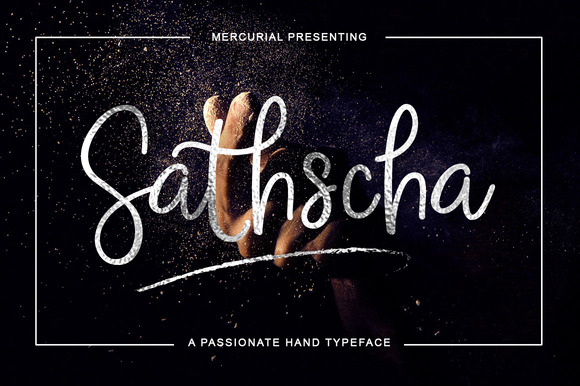
At its core, Sathscha is a handwritten font that mimics the natural flow of pen on paper. It does not feel stiff or mechanical. Instead, each letter carries a subtle variation in stroke thickness and curvature, giving it an organic, human touch. This makes Sathscha ideal for projects where you want to convey sincerity, creativity, or a personal connection.
Handwritten fonts have grown in popularity because they break away from the formality of traditional serif or sans-serif typefaces. They bring a sense of authenticity. Sathscha, in particular, excels because it strikes a perfect balance between being smooth and elegant while still feeling approachable. It does not sacrifice readability for style, which is a common pitfall with many handwritten fonts.
A Quick Look at the Numbers
One of the most impressive aspects of Sathscha is its sheer variety. The font includes 356 glyphs, which is a generous collection for a handwritten typeface. For context, many basic fonts contain only around 200 to 250 glyphs. Sathscha goes well beyond that, offering:
- Uppercase and lowercase letters with multiple stylistic alternates
- Numbers and punctuation that maintain the handwritten feel
- Accented characters for multilingual support
- Swashes and decorative ligatures that add flourish to your text
This abundance of glyphs means you can create unique typographic compositions without repeating the same letterforms. Each word can feel fresh, as if it were written by hand just for that moment.
Why a Font Like Sathscha Matters in Modern Design
In today’s digital world, we are surrounded by screens. Much of what we read is rendered in clean, uniform fonts designed for legibility. While that serves a purpose, it can also create a sense of distance. Handwritten fonts like Sathscha bridge that gap. They remind us of handwritten notes, greeting cards, and personal letters.
From a psychological perspective, handwritten typography often increases trust and emotional engagement. When people see a font that looks like natural handwriting, they subconsciously perceive it as more genuine. This is why handwritten fonts are frequently used in:
- Branding for small businesses and artisans
- Wedding invitations and event materials
- Social media graphics and quotes
- Packaging for handmade or organic products
- Children’s books and educational content
Sathscha fits perfectly into all these contexts. Its elegant yet relaxed appearance makes it versatile enough for both formal and casual use.
The Smooth Elegance of Sathscha: What Sets It Apart
Not all handwritten fonts are created equal. Some are too messy, making them hard to read at small sizes. Others are too polished, losing the hand-drawn charm. Sathscha finds the sweet spot. Let us break down what makes it special.
Smooth Flow and Consistent Rhythm
The term smooth is often used to describe Sathscha, and for good reason. The letters connect naturally, with gentle curves and even spacing. This creates a rhythm that is easy on the eyes. Whether you use it for a headline or a short paragraph, the text flows without jarring transitions.
Elegant Swashes and Decorative Elements
Sathscha comes loaded with swashes—those graceful, decorative strokes that extend from letters. These are not just afterthoughts; they are carefully designed to enhance the visual appeal of your text. You can use swashes to add a flourish to the first letter of a word, to underline a phrase, or to create ornate borders.
Because Sathscha includes so many glyphs, you have the freedom to mix and match. For example, you might choose a standard lowercase "a" for the body of your text but switch to a swashed version for the opening letter of a paragraph. This level of customization is rare in free fonts and adds immense value.
356 Glyphs: Room for Creativity
The 356 glyphs in Sathscha mean you are not limited to a single style. You can access alternate characters, ligatures, and swashes through any design software that supports OpenType features, such as Adobe Illustrator, Photoshop, Canva (with Pro features), or Affinity Designer. This opens up endless possibilities for personalizing your typography.
Practical Applications: Where to Use Sathscha
Understanding a font's features is one thing; knowing how to apply them is another. Here are practical ways to use Sathscha in real-world projects.
Branding and Logo Design
If you are building a brand that wants to feel warm and approachable—such as a bakery, a florist, a coaching practice, or a handmade jewelry shop—Sathscha can be the cornerstone of your visual identity. Its handwritten quality suggests care and craftsmanship. Use it for your logo, tagline, or even as part of your packaging design.
Social Media Content
Social media feeds are crowded. To stand out, you need visuals that stop the scroll. Sathscha works beautifully for quote cards, announcement posts, and highlight reels. Pair it with a clean background and soft colors, and your message will feel both personal and polished.
Invitations and Stationery
Weddings, baby showers, birthdays, and holiday cards all benefit from an elegant handwritten font. Sathscha’s swashes and alternates make it especially suited for formal invitations. You can create a single design that looks custom-lettered, even if you are working with a template.
Product Packaging
For products that emphasize natural ingredients or artisanal methods, Sathscha adds a handcrafted feel. Imagine a jar of organic honey with a label written in Sathscha, or a box of handmade soap with a recipe card set in the same font. The consistency builds trust and aesthetic appeal.
Educational Materials and Worksheets
Teachers and homeschool parents often look for fonts that are clear yet friendly. Sathscha works well for worksheets, flashcards, and classroom posters. Its readability at medium sizes, combined with its cheerful appearance, can make learning materials feel less intimidating.
How to Get Started with Sathscha
Ready to add this lovely freebie to your creations? Here is a step-by-step guide to getting the most out of Sathscha.
- Download the font from a trusted source. Make sure you obtain the complete file containing all 356 glyphs.
- Install the font on your system. On Windows, right-click the file and select "Install." On macOS, double-click and click "Install Font."
- Open your design software and select Sathscha from the font menu.
- Enable OpenType features to access swashes, alternates, and ligatures. In most programs, this is done through the Character panel or Glyph panel.
- Experiment with different combinations. Try swashing the first letter of a word, or use alternate glyphs to avoid repetition.
- Pair it wisely. Sathscha works best when combined with a simple, neutral font for body text. A clean sans-serif like Montserrat, Lato, or Open Sans complements Sathscha without competing for attention.
Common Misunderstandings About Handwritten Fonts
Before you start using Sathscha, it helps to clear up a few assumptions that people often have about handwritten typography in general.
Misunderstanding 1: Handwritten fonts are only for casual projects. In reality, as Sathscha demonstrates, a well-crafted handwritten font can be elegant enough for formal invitations and sophisticated branding. It is all about the execution and the context.
Misunderstanding 2: They are hard to read. While some handwritten fonts prioritize style over legibility, Sathscha is designed with readability in mind. Even with its swashes and flourishes, the letterforms remain distinct and easy to decode.
Misunderstanding 3: A font with 356 glyphs must be overwhelming to use. Actually, it is the opposite. More glyphs give you control. You can keep it simple or add flair depending on your needs. The extra characters are there as options, not obligations.
The Bigger Picture: Typography and Emotional Connection
Typography is not just about making words look nice. It is about how those words make people feel. In a world where digital communication often feels impersonal, choosing the right font can re-establish a human connection. Sathscha, with its smooth handwritten charm, does exactly that.
Think about the last time you received a handwritten note. It probably felt more meaningful than a typed message. That is the emotional weight behind Sathscha. When you use this font, you are borrowing a bit of that warmth. You are telling your audience that you put thought and care into your design.
This is especially relevant for small businesses and independent creators. Larger corporations often rely on generic branding to appeal to the masses. As a smaller entity, your strength lies in your authenticity. Sathscha helps you express that authenticity visually.
Tips for Making the Most of Sathscha
To truly take your designs to the next level with Sathscha, keep these practical tips in mind.
- Use it sparingly. Sathscha shines as a display font. Use it for headings, quotes, or short phrases rather than long bodies of text. For large blocks of text, pair it with a simpler font.
- Adjust tracking and kerning. Because Sathscha has a handwritten feel, you may need to tweak the spacing between letters for certain words. Most design software allows you to adjust letter spacing manually.
- Combine with textures. If you are designing for print or digital backgrounds, try placing Sathscha over a subtle paper texture or watercolor wash. This enhances the handcrafted look.
- Test at different sizes. Sathscha looks beautiful at large sizes where the swashes and alternates are clearly visible. At very small sizes, some of the finer details may be lost, so test your design at actual print or screen dimensions.
- Use color intentionally. A warm color palette—soft pinks, earthy browns, cream, or muted gold—complements Sathscha’s elegant personality. Avoid overly harsh or neon colors that might clash with its gentle nature.
Conclusion: Add This Lovely Freebie to Your Toolkit
Sathscha is more than just a font. It is a tool for storytelling, for connection, and for making your work feel truly yours. With its smooth and elegant handwritten style, its treasure trove of 356 glyphs, and its abundance of extra characters and swashes, Sathscha empowers you to create designs that leave a great impression.
Whether you are designing a logo, crafting a social media post, or preparing a wedding invitation, this font brings a human touch that is often missing in digital design. Best of all, it is available as a freebie, meaning you can start using it today without any barriers.
Typography shapes how your audience perceives your message. With Sathscha, that perception will be one of warmth, elegance, and care. So go ahead—download it, experiment with it, and let your designs speak with a more beautiful voice.