Baubles and the Art of Festive Typography: Why Seasonal Fonts Matter More Than Ever
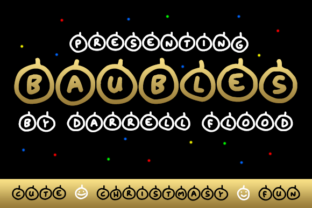
Every holiday season, brands, creators, and marketers face a familiar challenge: how to stand out in a sea of red-and-green visuals without sacrificing clarity or professionalism. The answer increasingly lies in typography—specifically, in fonts that capture the spirit of the season while remaining functional for modern workflows. Enter Baubles, a font designed by Darrell Flood that has quietly become a go-to asset for professionals who need Christmas cheer without the readability trade-off. At first glance, Baubles looks like festive decorations dangling from a tree, but beneath its playful exterior lies a clean, simple sans-serif that works across digital and print media.
This article explores why Baubles is gaining attention among entrepreneurs, freelancers, marketers, and designers, and what its rise says about broader shifts in creative strategy, audience expectations, and seasonal branding. Whether you are crafting a holiday campaign, designing a client newsletter, or refreshing your own brand assets for December, understanding the role of fonts like Baubles can give you a practical edge.
The Evolution of Seasonal Typography in a Digital-First World
Typography has always been a subtle driver of consumer perception, but its role has intensified as digital communication becomes the primary channel for brand interactions. Ten years ago, a festive font was often an afterthought—something applied to a printed flyer or a PowerPoint slide in late November. Today, seasonal typography must work across email headers, social media graphics, website banners, video thumbnails, and even app interfaces. The stakes are higher because the audience is more visually literate and less tolerant of fonts that sacrifice legibility for decoration.
Baubles addresses this tension directly. Its letterforms are essentially a straightforward sans-serif, which means they maintain the clean, modern lines that professionals rely on for body text and headlines alike. Yet each character is adorned with subtle, dangling ornament-like details that evoke Christmas tree decorations without distorting the underlying shape. This hybrid approach—festive but readable—reflects a broader industry movement toward functional decoration. Designers no longer have to choose between a font that looks like tinsel and one that works at 14 pixels on a mobile screen. Baubles delivers both.
This is not merely a matter of aesthetics. The shift responds to changing consumer behavior. People now interact with holiday content on phones while commuting, on tablets while cooking, on desktops while shopping. If a font causes eye strain or slows reading, the message is lost regardless of how charming the ornamentation is. Baubles, by grounding its decoration in a legible sans-serif structure, ensures that the festive spirit does not come at the expense of utility.
Why Creators and Marketers Are Paying Attention to Baubles
The attention around Baubles is not accidental. It taps into several converging needs among professionals who produce seasonal content at scale. First, there is the demand for authenticity. In an era when consumers are bombarded with generic holiday imagery—the same stock photos of snowflakes, the same cookie-cutter greetings—fonts that feel handmade or thoughtfully detailed offer a point of differentiation. Baubles, created by Darrell Flood, carries a crafted quality that suggests someone took the time to consider how each letter might dangle like a bauble on a branch. This attention to detail resonates with audiences who are increasingly skeptical of mass-produced design.
Second, there is the practical need for versatility. A freelancer designing a single holiday card might use a heavily ornate font for the headline and a separate sans-serif for the body. But a marketing team producing a multi-channel campaign needs a single type family that can handle both roles. Baubles functions as a standalone solution: its decorative elements make it suitable for titles and accents, while its sans-serif clarity allows it to carry longer text without fatigue. This reduces workflow complexity, a factor that matters greatly to lean teams and solo entrepreneurs.
Third, the font aligns with a growing preference for seasonal design that respects brand identity. A font that is too whimsical can clash with a brand’s established tone, forcing designers to create holiday content that feels disconnected from the rest of the year. Baubles, with its restrained ornamentation, integrates more easily into existing visual systems. A professional brand that typically uses a clean sans-serif for its website can add Baubles for the holiday season without a jarring shift. The font becomes a seasonal accent rather than a complete departure.
Changing Needs and Preferences in Holiday Branding
To understand why Baubles is relevant now, it helps to look at how holiday branding has changed in the past five years. The rise of direct-to-consumer businesses and independent creators has democratized seasonal marketing. A small seller on an ecommerce platform now competes for attention with major retailers during the same shopping window. This has forced smaller players to be more strategic about every visual element, including typography. They cannot afford a font that looks unprofessional or fails to render correctly across devices.
At the same time, the line between personal and professional content has blurred. Many entrepreneurs and freelancers use their personal brands to drive business, and their holiday communications often serve double duty: maintaining client relationships while also showcasing creativity. Baubles, with its warm, decoration-like appearance, helps strike a tone that is both friendly and credible. It signals that the sender put thought into the message, which in turn reinforces trust—a currency that is especially valuable during the holiday season when inboxes are overflowing.
Another factor is the growing emphasis on inclusivity in seasonal design. Not every recipient of a holiday campaign celebrates Christmas in the same way, or at all. While Baubles is explicitly Christmas-themed, its sans-serif foundation and gentle ornamentation avoid the heavy religious iconography that can alienate segments of an audience. The font feels festive without being exclusive, making it a more considerate choice for brands that serve diverse customer bases. This nuance matters more today than it did a decade ago, as consumers increasingly evaluate brands on cultural awareness and inclusivity.
Practical Examples: Baubles in Action Across Workflows
Consider a digital marketing agency tasked with producing a holiday email series for a retail client. The team needs a headline font that immediately conveys "holiday season" but also holds up in dark mode, on retina displays, and when scaled down for mobile previews. Baubles, because its decorative elements are integrated into a simple sans-serif structure, remains crisp even at smaller sizes. The ornaments do not break apart or become illegible—a common issue with highly ornate typefaces. The agency can use Baubles for subject lines, call-to-action buttons, and section headers, creating a cohesive visual language across the series.
Another scenario: a freelance graphic designer creating a set of social media templates for a boutique hotel. The hotel wants to promote its Christmas packages with a look that feels elegant and festive, not childish or gaudy. Baubles, with its dangling bauble-like details, adds a touch of whimsy without overwhelming the hotel’s upscale branding. The designer can pair Baubles with a neutral serif for body text, or use it alone for short, impact-driven phrases like "Book Your Holiday Escape." The font’s readability ensures that the offer is not lost behind the decoration.
For an entrepreneur running a small online shop, Baubles can unify product labels, shipping inserts, and social media posts. Rather than juggling three different fonts to cover holiday and everyday needs, the entrepreneur picks one font that does both. This simplification saves time and reduces the risk of brand inconsistency. The same font that says "Free Shipping for the Holidays" on an Instagram story also works for a printed thank-you note tucked into a package.
These examples illustrate a larger trend: the move toward multi-use typefaces that reduce creative overhead. As content volume increases—more posts, more emails, more formats—creators and marketers need tools that deliver consistent results without requiring a specialist to adjust kerning or worry about legibility. Baubles fits this need because its designer, Darrell Flood, built it around the principle that a seasonal font should first be a working font.
Connecting Baubles to Larger Developments in Design and Business
The emergence of fonts like Baubles is not an isolated phenomenon. It reflects a broader industry shift toward purpose-driven design that prioritizes user experience over novelty. In the same way that responsive web design became standard because audiences access content across devices, seasonal typography is evolving because audiences expect holiday branding to meet the same usability standards as everyday branding. A font that is difficult to read on a phone is not charming—it is a barrier to conversion.
Additionally, the growing availability of high-quality independent fonts has changed the landscape for professionals. Platforms that distribute fonts from independent creators have lowered the barrier to entry, allowing a font like Baubles to reach a global audience without needing to be part of a massive corporate type foundry. This democratization means that seasonal fonts are no longer limited to a handful of overused options. Professionals can choose a font that genuinely fits their tone, audience, and medium, rather than settling for something generic.
From a business perspective, the attention to Baubles also signals an increased awareness of micro-seasonal marketing. Holidays are becoming more granular—Black Friday, Cyber Monday, Giving Tuesday, the twelve days of Christmas, New Year’s Eve—each with its own visual expectations. A font that works for the entire holiday window is valuable because it provides consistency across these micro-seasons. Baubles, with its neutral festive vibe, avoids being too specific to one event, making it a reliable choice for campaigns that run from late November through early January.
Finally, the rise of remote and hybrid work has changed how creative teams collaborate. In the past, a designer might produce a holiday campaign with a team in a single office, using shared design files. Today, teams are distributed, and assets must be easy to share, open, and apply across different software and platforms. Baubles, as a standard font format (likely available as OTF or TTF), integrates into common tools like Adobe Creative Suite, Canva, Figma, and even web platforms via CSS. This adaptability is essential for teams that cannot afford friction in their workflows.
Observations on the Future of Seasonal Typography
While it is important not to speculate, some observations can be made about the trajectory that fonts like Baubles represent. First, the line between decorative and functional fonts will continue to blur. Designers and marketers will increasingly demand typefaces that can be festive without sacrificing performance. Second, the role of the independent font designer, such as Darrell Flood, will grow as professionals seek unique options that differentiate their brands. Third, seasonal design will become more integrated into year-round brand systems, rather than being treated as a separate, temporary visual identity.
For now, Baubles stands out because it answers a simple but persistent question: How do I make my holiday content look festive without making it hard to read? The font’s ability to resolve that tension is why it is being adopted by professionals across industries. Whether you are a marketer planning a multi-channel campaign, a creator designing digital products, an entrepreneur building seasonal promotions, or a freelancer looking to impress clients with refined holiday materials, Baubles offers a practical tool that aligns with how work gets done today.
In a crowded holiday landscape, the fonts you choose say as much about your brand as the words you write. Baubles, with its careful balance of decoration and clarity, helps you say something worthwhile—and ensures your audience can read it clearly, no matter where they see it.