The Barra: A Vintage Painter Style Font for Thoughtful Design Choices
When you are choosing a typeface for a project that needs to feel both crafted and clean, the options can feel surprisingly narrow. Many display fonts lean heavily into either ornamental excess or sterile minimalism. That is where The Barra stands apart. Designed as a vintage painter style font, it captures the rough-hewn character of hand-painted signage while retaining the legibility and structure expected from a clean display typeface. For designers, marketers, and small business owners evaluating their font library, understanding what The Barra offers—and where it sits among similar categories—can make a meaningful difference in how a project lands with its audience.
What Makes The Barra Distinct
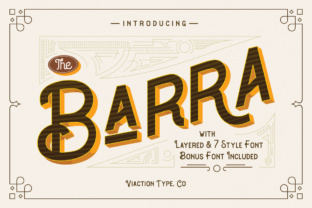
The Barra is not trying to be everything to everyone. Its identity is rooted in a specific intersection: the warmth of vintage painted letterforms and the polished usability of a modern display font. The characters carry subtle irregularities—slight variations in stroke weight, gentle roughness at edges, and proportions that evoke mid-century storefronts or product packaging. Yet these quirks are controlled. The font does not sacrifice readability for the sake of aesthetic personality. This balance is rarer than you might expect.
Many fonts that aim for a hand-painted look end up being too unpredictable for body copy or small sizes. The Barra avoids that pitfall. Its letterforms are constructed with enough consistency that you can use it for headlines, logos, or short blocks of text without the reader struggling to decode each character. That makes it a practical tool for real projects, not just a novelty option reserved for one-off posters.
Another distinguishing feature is the way The Barra handles curves and terminals. There is a deliberate softness to the corners—a quality that suggests brush or roller application rather than digital perfection. This matters because the viewer subconsciously registers the difference. A font that feels painted rather than plotted can evoke trust, nostalgia, or craftsmanship, depending on the context.
How The Barra Compares with Similar Style Categories
To evaluate where The Barra fits best, it helps to place it alongside related typeface categories. The vintage painter style exists on a spectrum, and understanding that range clarifies when The Barra is the right choice and when you might need something else.
Hand-Lettered and Script Fonts
Hand-lettered fonts often mimic calligraphy or brush pen writing. They tend to have pronounced variation between thick and thin strokes, flowing connections between letters, and a more informal rhythm. The Barra is distinct from this category. It is a display font with consistent cap heights and a structured baseline, rather than a script. If your project needs a personal, handwritten feel, a script might serve you better. But if you want the appearance of painted lettering that still reads like a dependable typeface, The Barra occupies that middle ground.
Rough or Distressed Fonts
Some vintage-style fonts achieve their character through heavy distressing—missing chunks, scratched surfaces, or extreme wear. These can be effective for grunge aesthetics or horror-themed designs, but they often become illegible at small sizes or in digital contexts. The Barra takes a more restrained approach. Its painterly quality comes from the shape and proportion of the letterforms themselves, not from aggressive texture overlay. This means it works across media: print, web, signage, and merchandise. You do not lose the vintage feel when you scale it down or view it on a screen.
Classic Serif and Sans-Serif Display Fonts
Traditional display serifs like slab or wedge serifs offer structure and formality. Sans-serif display fonts provide modern clarity. The Barra draws from both traditions in terms of legibility and construction but adds a layer of tactile warmth. If your brand or project needs to convey authority or sleek modernity, a more conventional display font may be appropriate. The Barra leans toward approachability and character. It signals that someone crafted the message, not just typed it.
Strengths and Best-Fit Situations for The Barra
Knowing when to reach for The Barra can save you time and improve your design outcomes. The font shines in contexts where you want to communicate authenticity, heritage, or handcrafted quality without losing professional polish.
Branding for Small Businesses and Artisanal Products
Coffee shops, bakeries, breweries, woodworkers, and independent retailers frequently need a typeface that feels personal and local. The Barra works well for logos, menu boards, product labels, and signage. It suggests a business that values quality and tradition, without looking like a generic template. Compared to using a standard system font that feels impersonal, or an overly decorative font that feels amateurish, The Barra strikes a credible middle path.
Event and Poster Design
For concerts, markets, workshops, or community events, the font needs to grab attention from a distance while fitting the mood. The Barra does both. Its clean display structure ensures readability at large sizes, while its painterly character sets a tone that is inviting rather than corporate. Event posters using The Barra tend to feel grounded and genuine.
Packaging and Product Labels
In retail environments, packaging has seconds to communicate a product's personality. The Barra can appear on jars, boxes, bottles, or bags to suggest a small-batch or handmade origin. It pairs well with simpler secondary fonts and does not overwhelm the layout. For products that compete on quality and story rather than price, this typeface supports that narrative.
Digital Headlines and Web Banners
Web design often defaults to safe, neutral fonts. The Barra provides an alternative for hero sections, blog headers, or landing page titles. Because it is a clean display font, it renders reliably across browsers and devices. The vintage painter style adds differentiation without sacrificing usability. In a landscape where many sites look similar, a distinctive headline font can improve engagement and recall.
Tradeoffs and Limitations to Consider
No single font is right for every project, and The Barra has limitations worth evaluating carefully before committing to it.
Not Ideal for Long-Form Body Text
The Barra is a display font. Its character is designed for impact, not extended reading. Using it for paragraphs of body copy will fatigue the reader and reduce readability. For long articles, reports, or documentation, you will need a complementary text font—usually a neutral sans-serif or serif—that lets The Barra do the heavy lifting for headlines while the body remains comfortable to scan.
Potential Mismatch with Modern or Minimalist Brands
If your brand identity relies on sleek minimalism, high-tech aesthetics, or cold precision, The Barra may feel out of place. Its vintage painter style carries inherent warmth and slight irregularity. For tech startups, financial services, or contemporary fashion brands that want a frictionless, futuristic look, a cleaner geometric sans-serif typically serves the brief better. The Barra is not a universal tool; it is a specific voice.
Limited Glyph Set and Language Support
Some vintage-inspired fonts come with restricted character sets. Depending on the version of The Barra you are using, you may need to verify coverage for accented characters, ligatures, or extended Latin alphabets. If your project requires multilingual support or special typographic features, check the font's specifications before committing to it. In some cases, you might need to supplement with alternate characters or choose a different font altogether for certain languages.
Pairing Requires Thought
Because The Barra has a strong personality, it does not pair effortlessly with every other typeface. Matching it with a font that is too similar in style can create visual competition. Matching it with a font that is too neutral can make the contrast feel jarring. Effective pairing usually involves a simple sans-serif or a classic serif that complements without competing. Designers should plan for this extra step rather than assuming The Barra will work alone.
Decision Factors: Choosing The Barra or Exploring Alternatives
When you are evaluating whether The Barra is the right choice for a given project, consider these practical factors:
- Audience expectation: Does your audience respond to warmth and tradition, or do they expect sleek modernity? The Barra suits audiences that value craftsmanship, local character, or nostalgia.
- Medium and scale: The font performs best at medium to large sizes in print and digital. Avoid using it where fine detail will be lost, such as very small text or low-resolution screens.
- Brand voice: If your brand voice is friendly, grounded, and artisanal, The Barra reinforces that message. If your voice is authoritative, technical, or minimal, look for a display font with less personality.
- Project timeline: Because pairing and testing may take extra iterations, allow time to experiment with how The Barra sits alongside other elements in your layout.
For projects where The Barra does not quite fit, consider exploring other display fonts within the vintage or handcrafted category that offer a different balance of roughness to readability. Some options lean more heavily into the hand-painted effect with greater irregularity, which can work for short, expressive text. Others clean up the edges for a more polished retro look. The key is to match the font's level of personality with the project's need for clarity versus character.
Practical Examples of The Barra in Use
Imagine a local roastery launching a new single-origin coffee. The label needs to communicate origin, quality, and approachability. Using The Barra for the coffee name and origin country creates an immediate sense of place and craftsmanship. Pair it with a clean sans-serif for tasting notes and roast level, and the label feels intentional without being cluttered. The vintage painter style aligns with the specialty coffee culture that values process and tradition.
Or consider a community music festival poster. The headline announces the event name in The Barra, and supporting details—date, location, lineup—appear in a simple sans-serif. The font's warm, painted quality suggests outdoor stages, local vendors, and a welcoming atmosphere. Compared to using a generic bold sans-serif, the poster stands out as having a curated identity.
For a wedding invitation suite, The Barra can appear on the main invitation card for the couple's names, while a delicate script or classic serif handles the details. The result is formal enough for the occasion but not stiff—a balance many couples are looking for when they want something beyond standard calligraphy fonts.
Final Considerations for Your Decision
Choosing a display font is rarely about finding the single best option. It is about matching the font's strengths to your project's specific needs. The Barra offers a thoughtful combination of vintage painter style and clean display structure. It gives you character without chaos and warmth without sloppiness. For projects that benefit from a handcrafted look with professional reliability, it deserves a place in your consideration set.
At the same time, recognize that its personality makes it a specialized tool. It is not designed for every brand, every medium, or every message. When you evaluate The Barra, ask yourself what your project needs to say and who needs to hear it. If the answer aligns with authenticity, tradition, and approachability, The Barra is a strong candidate. If the answer calls for something more neutral, modern, or minimal, you will likely find a better fit elsewhere.
Ultimately, the best font decisions come from understanding the tradeoffs. The Barra makes clear choices about what it prioritizes—character, warmth, and legibility in a vintage painter style. Knowing those priorities helps you decide when to use it and when to look further. And that awareness, more than any single typeface, is what separates a thoughtful design from a merely functional one.